


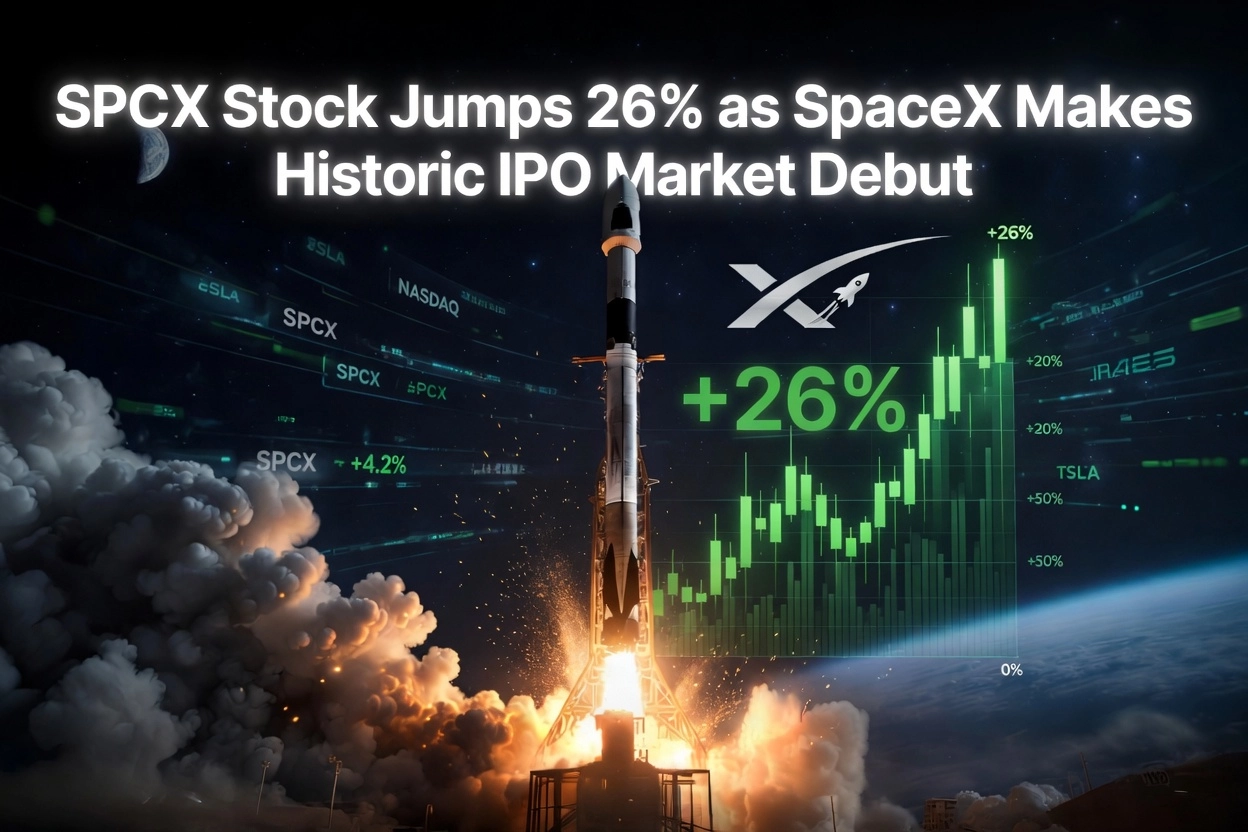
SpaceX hit the public markets and didn’t waste any time making an impression. SPCX climbed around 26% in its first trades after pricing at $135 per share, one of the more dramatic IPO debuts anyone on Wall Street has seen in a while.
The listing on Nasdaq under the symbol SPCX became the market event of the year almost immediately. SpaceX raised roughly $75 billion through the offering, arriving with a valuation that would make most established companies uncomfortable. Once the opening surge settled, the question investors started asking was the obvious one: Can SpaceX actually earn what the market just decided it’s worth?
The excitement isn’t purely about rockets, and that’s part of what makes this IPO different. SpaceX has built real positions across commercial launches, satellite internet, defense-related space services, and long-term deep-space plans. The Starlink business matters especially because it generates recurring subscription revenue, the kind that doesn’t depend on whether a launch contract comes through in a given quarter. That makes SpaceX harder to categorize than a spaceflight company. It’s also a communications business, an infrastructure play, and a bet on whatever the space economy looks like a decade from now.
Broader investor appetite helps explain the scale of demand, too. Markets have spent the last few years rewarding companies at the intersection of advanced technology themes, artificial intelligence, semiconductors, defense tech, and space infrastructure. SpaceX sits in the middle of several of those at once, a rare position that investors clearly decided was worth paying up for. For more on how that appetite plays out across the tech sector, see our piece on AI-driven investor interest.
None of that makes the risks disappear, though. SpaceX operates in industries that eat capital. Rocket development, satellite constellation expansion, spacecraft systems, future missions- these aren’t cheap, and they don’t move on investor-friendly timelines. A valuation at this level means the market is pricing in a lot of things going right for a long time. That’s a high bar to clear consistently.
Regulatory and competitive pressures are real, too. Launch approvals, satellite licensing, government contract dependencies, and a global broadband market that isn’t standing still, any of these could complicate the growth story. A strong debut buys goodwill, but public-market investors have shorter memories than venture backers.
For now, the debut itself is hard to argue with. The 26% jump reflects genuine pent-up demand from investors who spent years watching SpaceX from the outside. Where the stock goes from here depends on something simpler and harder than hype: whether SpaceX can turn its launch dominance, Starlink momentum, and long-term ambitions into financial performance that justifies what Friday’s buyers paid.
SpaceX has already changed how the space industry works. The next challenge is proving it can satisfy Wall Street while doing it.

0 Comments