


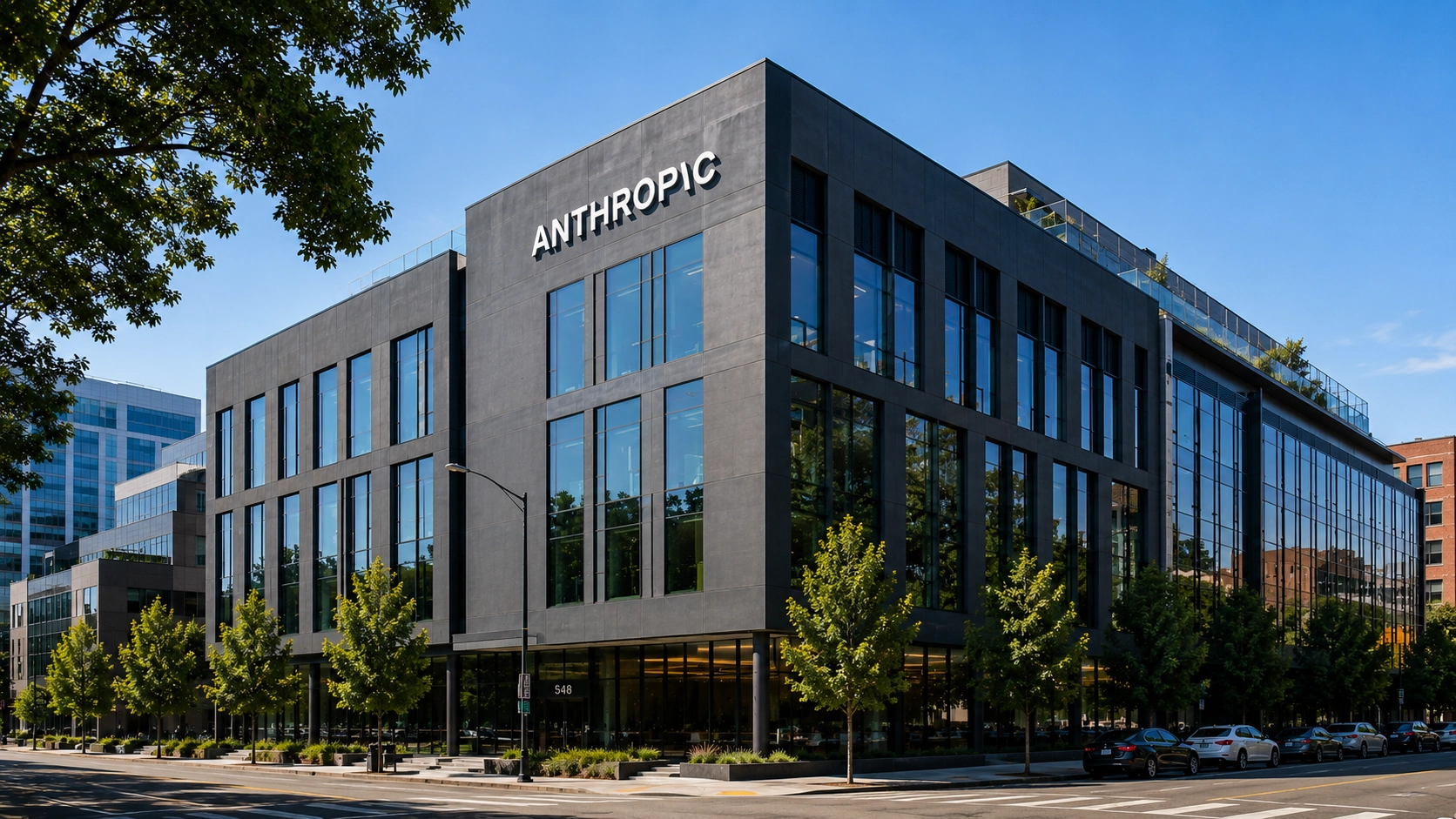
Anthropic‘s latest $35 billion financing deal with Apollo, Blackstone, Broadcom, and Fluidstack is about to give the company behind Claude a lot more computing power. The scale is genuinely hard to process.
The deal adds more than one gigawatt of computing capacity, with deployment starting at Fluidstack-operated data centers from mid-2026. One gigawatt powers roughly hundreds of thousands of homes. In AI terms, it’s the energy you need when your models run constantly and compute costs climb faster than revenue.
This isn’t a normal funding round. It’s closer to how you’d finance a power plant.
Why Private Equity Is Moving Into AI Infrastructure
For years, large amounts of private capital went into roads, energy grids, telecom towers, and warehouses. Now it’s going into AI data centers because that’s where the essential infrastructure is.
For Anthropic, the logic is straightforward. More compute means greater capacity to train models, serve enterprise customers, and keep up with rivals that are spending just as aggressively. You can’t run a competitive AI lab on rented cloud capacity forever; at some point, you need infrastructure built specifically for heavy AI workloads.
For Apollo and Blackstone, it’s a reasonably long-term bet. AI infrastructure requires enormous upfront capital, but demand isn’t cooling. Companies are using AI for coding, customer service, research, automation, data analysis, and internal software. Backing infrastructure means exposure to all of that without betting on any single model winning.
Broadcom‘s role matters separately. The deal runs on its custom chips and networking solutions, which are significant right now. Many tech companies are trying to reduce Nvidia dependence. Custom silicon can improve performance, cut power use, and lower the cost of running models at scale. That’s not incidental to this deal; it’s part of why the economics work.
The deal also connects with the wider conversation around AI investment and chip demand. Readers interested in how AI is reshaping companies and investors can read our related coverage of AI-driven market trends.
What This Means for the AI Industry
The AI race used to look like a software competition. Build a smarter model, win users, grow revenue. That hasn’t changed, but it’s no longer the whole story. Compute, chips, power supply, real estate, and long-term financing now matter just as much as what the model can actually do.
The deal also shows how intertwined the AI economy has become. Chipmakers, cloud providers, private lenders, asset managers, and AI labs are tied together in infrastructure projects running for years. That’s a different kind of industry than most people pictured when ChatGPT launched.
The platform is expected to eventually support more than 20 gigawatts of AI computing capacity across leading labs, including OpenAI, through 2028. Whether demand grows fast enough to justify all of it is an honest question nobody can fully answer.
The risks are real. These projects need sustained AI adoption, stable revenue, reliable power, and full utilization of expensive hardware. If model training gets cheaper or growth plateaus, some of this spending will look like it arrived too early.
Still, the companies pulling ahead may not just be the ones with the best research. They’ll be the ones who secured infrastructure, locked in compute, and built the financial partnerships to sustain years of heavy spending. Anthropic just committed heavily to that approach.


0 Comments