


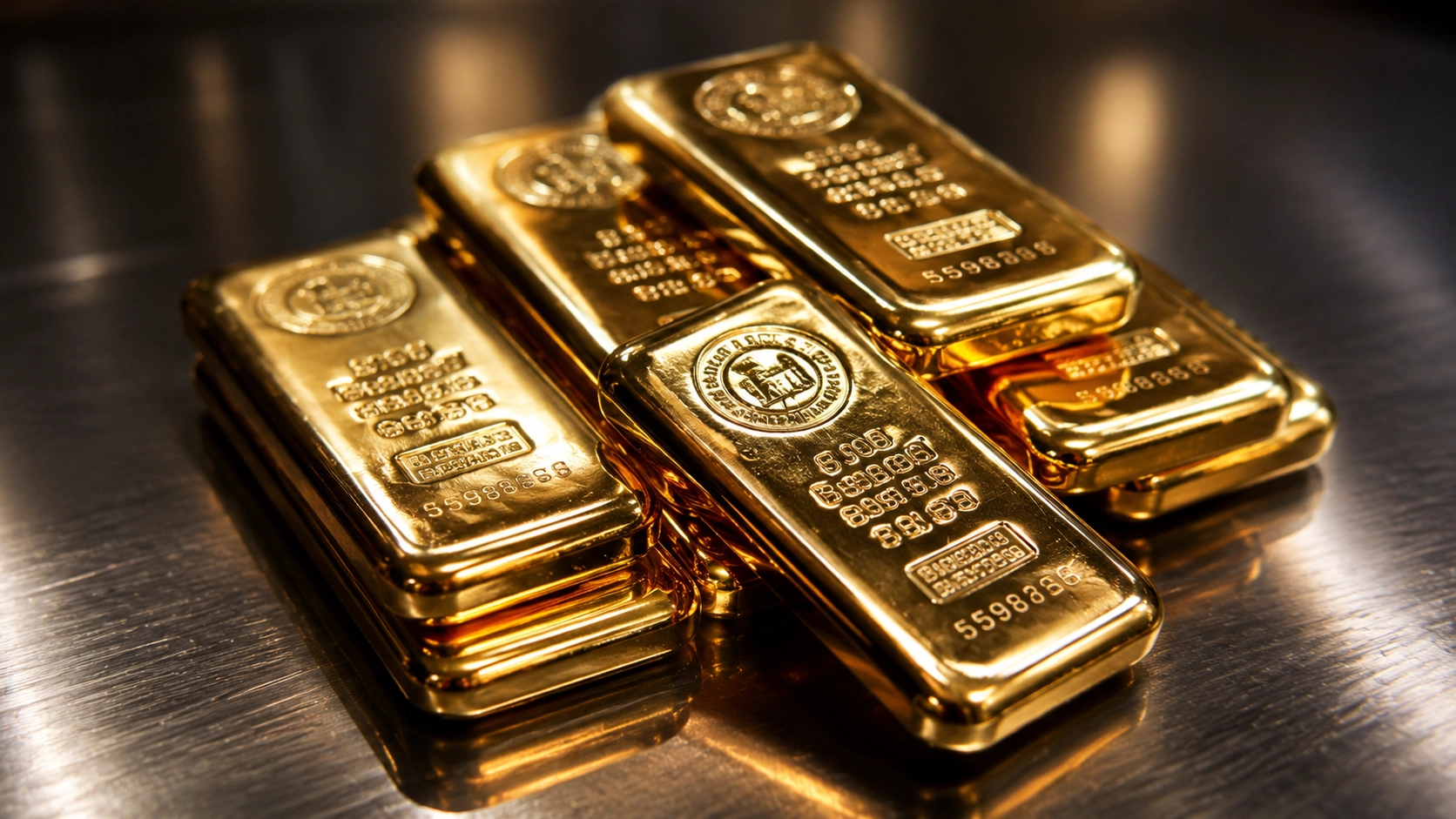
Gold is on track for a third straight weekly decline, caught between a firmer dollar and a Federal Reserve that keeps signaling it isn’t done with tight policy. The move says a lot about how fast sentiment has shifted since the Fed held rates steady but left the door open to further tightening.
Spot gold fell again on Friday, extending a rough week. The pressure came from the same two places it usually does when gold struggles: a stronger dollar and rising expectations that US interest rates aren’t coming down anytime soon. Gold doesn’t pay interest, so when yields climb and the dollar firms up, investors tend to rotate toward assets that actually offer returns or better currency protection. Gold gets left behind.
The latest leg down followed the Fed’s decision to hold its benchmark rate in the 3.50% to 3.75% range while keeping inflation squarely in the center of its outlook. Policymakers didn’t signal any comfort with where prices are, and markets read that as hawkish, lifting the dollar and pushing back any expectations of a near-term cut.
A stronger dollar adds another layer of pain for gold. It makes the metal more expensive for buyers in other currencies, which dampens demand in major markets like India, China, and the Middle East, especially when local prices are already elevated. On top of that, higher US rate expectations make holding gold feel increasingly costly compared to earning real yield on bonds.
Earlier in the year, geopolitical risk around the Middle East and energy markets had been propping gold up with safe-haven demand. A lot of that has faded as monetary policy expectations dominate the conversation. The mood is still cautious, but gold has lost the upward momentum it had a few months ago.
What the Fed’s Message Means for Gold
Gold is unusually sensitive to interest-rate expectations, and the current dynamic illustrates exactly why. When traders believe cuts are coming, gold tends to benefit; lower yields make a non-yielding asset a lot more appealing. When traders think rates are staying high or could go higher, gold suffers. That’s precisely what’s happening right now.
The Fed’s inflation warning has forced a rethink of earlier hopes for easier policy. Instead of pricing in cuts, investors are now preparing for a longer stretch of tight financial conditions, and that shift has been good for the US Dollar Index and bad for gold. For more on the dollar’s reaction to all of this, see our coverage of the dollar’s rise after the Fed held rates.
The technical picture hasn’t helped either. Gold has struggled to hold above key moving averages after breaking through them, which makes short-term traders more cautious and often triggers additional selling as funds trim exposure and wait for things to settle.
The longer-term case for gold isn’t completely broken, though. Central bank buying, geopolitical uncertainty, debt concerns, and demand for portfolio protection are still real factors. For plenty of investors, gold still functions as a hedge against political instability, currency weakness, and financial stress. The problem is that those longer-term supports are currently losing the argument against a strong dollar and a hawkish Fed.
The question now is whether this is a temporary correction or the start of something more serious. If inflation stays sticky and the Fed keeps pushing its tough message, gold could fall further. If inflation data starts to cool or economic numbers disappoint, rate-cut expectations could creep back and give gold some breathing room.
Oil is worth watching, too. Energy costs feed into inflation expectations, which feed into Fed policy. Another spike in oil prices could keep interest-rate fears alive and maintain the pressure on gold. A continued drop in energy costs could do the opposite, ease inflation concerns, and eventually make rate cuts look more realistic, which would help gold recover.
The weakness isn’t limited to gold either. Silver, platinum, and palladium have all come under pressure alongside it, suggesting investors are pulling back from the metals complex broadly rather than reacting to anything specific to gold. That kind of across-the-board selling usually reflects a macro call, in this case, a stronger dollar and concerns about global demand.
For anyone holding gold as a long-term hedge, none of this fundamentally changes the thesis. Gold has always dealt with periods of short-term pressure when the dollar is strong and yields are rising. It’s not immune to macro forces just because it’s considered a safe haven.
But in the near term, the Fed is running the show. Until there’s clear evidence that inflation is actually cooling and further rate hikes are genuinely off the table, gold is going to have a hard time finding momentum.
Three straight weekly losses are a fairly clear message: safe-haven demand only gets you so far. Right now, the dollar and the Fed still have more say over where gold goes than any amount of geopolitical risk does.


0 Comments