


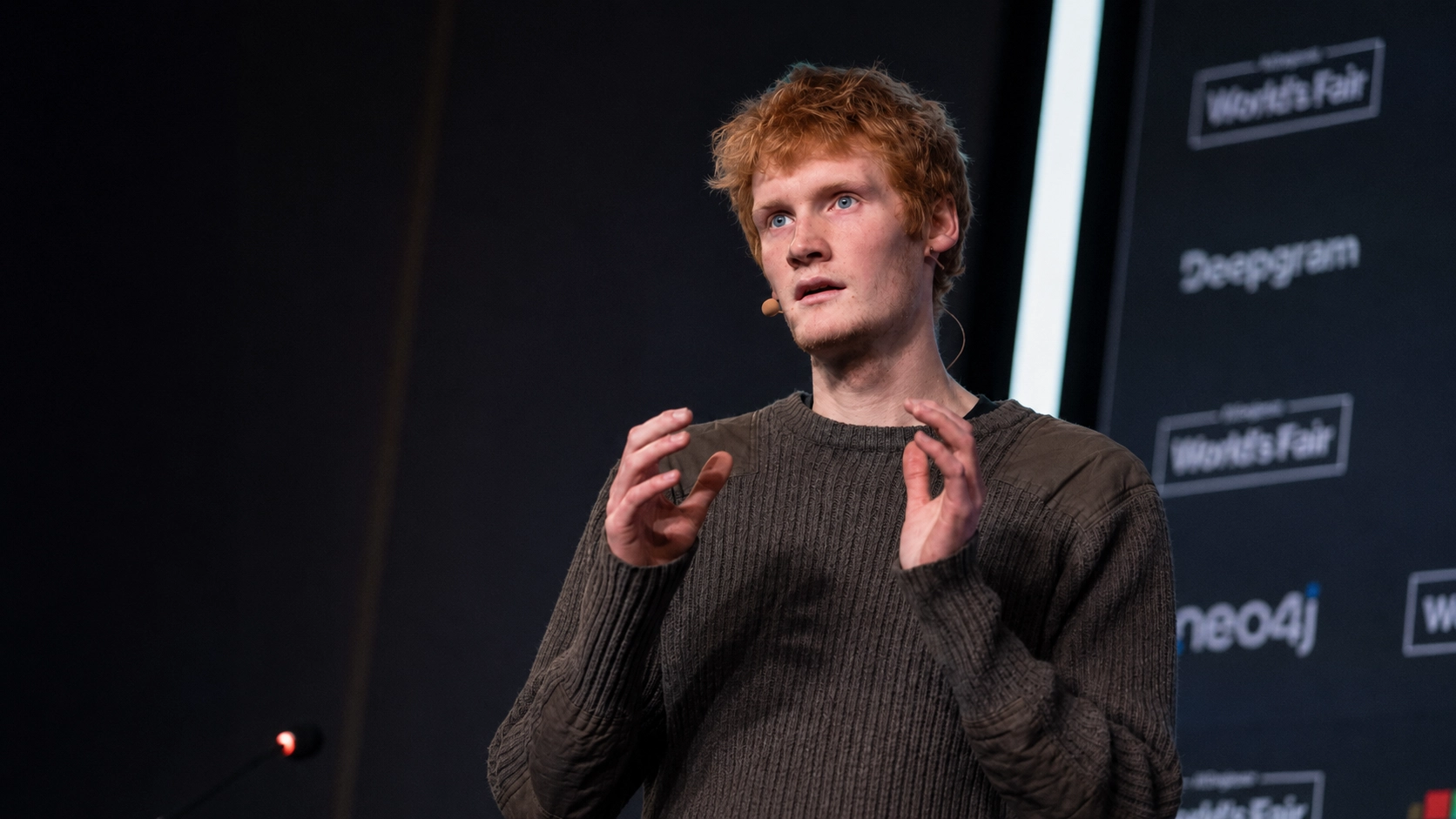
Michael Truell doesn’t look like the loud, spotlight-hungry founder Silicon Valley tends to celebrate. The young CEO of Cursor is known more for quiet intensity than public performance, more for long coding sessions than viral speeches, more for product obsession than founder celebrity. Yet behind that calm exterior is one of the more interesting stories in AI right now: a fast-growing coding company now linked to SpaceX and Elon Musk’s broader technology universe.
Truell, a former MIT student and co-founder of Cursor’s parent company Anysphere, has become one of the most closely watched young leaders in AI. Cursor started with a focused idea: make coding faster and more natural by putting AI directly inside the developer’s workflow. Instead of asking programmers to toggle between a chatbot and a code editor, Cursor lets them write, edit, debug, and understand code in the same place.
That focused product idea has grown into something much larger. Cursor is now part of the wider fight over the future of software development, where startups are taking aim at giants like Microsoft, OpenAI, Anthropic, and Google. Microsoft has GitHub Copilot, Anthropic has Claude Code, and OpenAI keeps pushing AI deeper into coding through its developer tools. Cursor’s rise shows that a startup can still compete if it builds something developers actually want open all day. That shift is also visible in how AI coding startups are starting to put real pressure on Big Tech’s strongest developer platforms.
A Quiet Founder With Big AI Ambitions
Truell’s reputation is built on technical discipline. People who’ve followed his rise describe him as focused, reserved, and unusually serious about engineering. That personality has shaped what Cursor is. The company isn’t trying to win through noise; it’s trying to win by building a tool that feels indispensable to modern software work.
But the quiet style shouldn’t be mistaken for a modest vision. Truell’s ambition runs well beyond creating a better code editor. Cursor is trying to become a central layer in how software gets made. As AI coding moves past autocomplete, tools like Cursor are starting to behave more like engineering partners, understanding files, suggesting changes, explaining code, fixing bugs, generating tests, and helping developers navigate large codebases more quickly.
That’s what makes the company’s connection to SpaceX worth paying attention to. SpaceX has reportedly secured an option to acquire Cursor at a significant valuation, while also building a strategic relationship around AI coding and compute. On the surface, a rocket company and a coding startup seem like an odd pair. The logic gets clearer quickly, though.
The Cursor needs computing power. Advanced AI coding systems require serious infrastructure to train models, run agents, and serve developers at scale. SpaceX, especially as Musk pushes deeper into AI through xAI, needs stronger software automation and better developer tools for large technical operations. Rockets, satellites, robotics, simulations, manufacturing systems, and space infrastructure all run on software. If AI helps engineers build and maintain that software faster, the relationship stops looking strange and starts looking strategic.
The SpaceX connection also gives Cursor’s story a different kind of weight. SpaceX isn’t only building rockets; it’s building satellite networks, launch systems, and long-term space infrastructure. Cursor is trying to reshape how software gets built. Together, the pairing suggests that AI coding could matter well beyond normal app development, becoming part of the technical backbone behind aerospace, automation, and large-scale engineering. That matters even more as the broader AI compute race intensifies across the industry.
None of this means Cursor’s path is smooth. AI coding tools are powerful and genuinely useful; they’re also imperfect. They misread context. They generate code that looks right but creates problems downstream. They can make developers move faster in ways that introduce hidden technical debt. Truell himself has said publicly that blindly accepting AI-generated code can cause serious issues as software systems grow more complex.
That warning matters because it gets at the real tension inside Cursor’s success. The company is selling speed, but it can’t afford to make developers sloppy. It wants AI to be a stronger partner in software development, not a substitute for engineering judgment. The best version of Cursor’s future isn’t one where developers stop understanding code. It’s one where AI handles the repetitive work while engineers stay in control of what actually ships.
The competitive pressure is also real. Big Tech has money, cloud platforms, model access, and enterprise distribution that a startup can’t match directly. Microsoft can tie Copilot to GitHub and Visual Studio Code. Anthropic can push Claude Code backed by strong reasoning models. OpenAI can improve coding through its foundation models and developer ecosystem. Google can connect AI coding to cloud services and enterprise products. Cursor has to keep improving fast while convincing developers that a focused, purpose-built experience beats whatever the larger companies bundle together.
That’s where Truell’s leadership actually counts. Cursor’s advantage isn’t just that it uses AI; plenty of tools do. The advantage is that it’s built around how developers actually work. Software engineers care about speed, context, reliability, and flow. A tool that saves time without breaking concentration can become genuinely valuable, even in a market crowded with bigger names and bigger budgets.
Truell’s quiet push toward what some are calling galactic ambitions is really a story about where AI is heading next. The loudest companies still dominate headlines, but the shifts that actually matter often start with focused tools that change how people work day to day. Cursor started as an AI coding editor. Its trajectory now points toward something bigger, a future where software development, AI infrastructure, and advanced engineering become tightly connected in ways that aren’t yet fully visible.
If Cursor gets there, Truell may not be remembered only as the founder of a popular coding tool. He might be remembered as one of the young technical builders who helped turn AI coding into a foundation for the next era of technology, from everyday software teams to the companies trying to build well beyond Earth.
0 Comments