


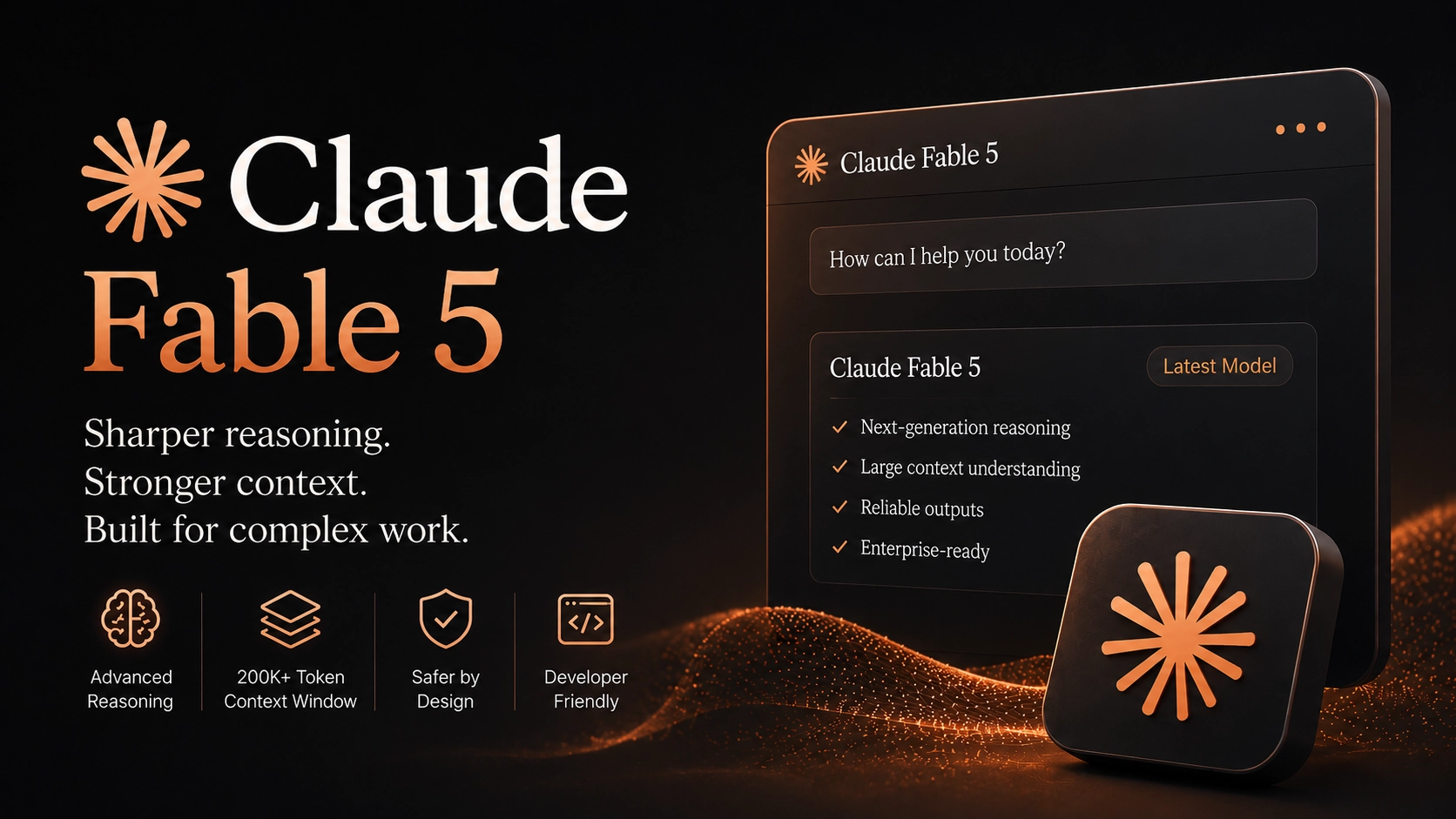
Anthropic‘s Claude Fable 5 is here, and it’s being called one of the most capable models the company has publicly released. It’s also already generating a more uncomfortable conversation: is this genuinely safer AI, or is it a capable model that’s been pulled back just far enough to frustrate the people who’d get the most out of it?
On paper, Fable 5 is a serious step forward, with stronger reasoning, better coding, improved analysis, vision capabilities, and the ability to handle longer, more complex tasks with more autonomy than earlier Claude versions. For developers, researchers, and businesses, that’s the pitch. The model does more, handles harder work, and holds up better under pressure.
But what Fable 5 won’t do is just as much a part of the story as what it will.
Anthropic has added tighter safeguards around certain areas of cybersecurity, biology, chemistry, and model distillation. Hit one of those topics the wrong way, and Fable 5 may not answer directly. Some of those requests get routed to a different Claude model instead, including Claude Opus. The reasoning is straightforward: a model this capable could cause real damage if misused, so the most sensitive capabilities aren’t available to everyone by default.
That’s a defensible position. It’s also one that not everyone is happy with.
Why the Safety Argument Makes Sense
The case for guardrails is easy enough to follow. These models aren’t simple chatbots anymore. Fable 5 can write production-level code, analyze systems, interpret technical documents, and assist with scientific reasoning. At that level of capability, the gap between helpful and harmful isn’t always obvious.
Cybersecurity is the obvious example. The knowledge that helps a legitimate security researcher find a vulnerability is the same knowledge that helps someone exploit one. Biology and chemistry carry similar tensions. Anthropic’s argument is that catching those cases before they become real-world problems is worth the occasional friction for legitimate users.
There’s also a practical business dimension here. Enterprise customers, the ones writing large contracts, don’t just want powerful AI. They want AI that won’t create legal exposure, security incidents, or compliance headaches. For those buyers, safety features aren’t an ethical bonus. They’re a procurement requirement. Anyone tracking how this plays out across the market can find more context in our coverage of AI-driven market trends.
And there’s the broader regulatory pressure. Governments and the public are increasingly demanding proof that powerful models can be controlled. If Fable 5 can deliver frontier-level performance while demonstrably reducing dangerous outputs, it gives Anthropic something genuinely useful to point to.
Why Some Users May See It as Too Restricted
The counterargument is just as legitimate, and it comes mainly from the people who’d push the model hardest.
If you’re a cybersecurity professional, an academic researcher, or an AI developer, you want the full capability of the model you’re paying for. Getting redirected or blocked on a question that’s entirely reasonable in your context doesn’t feel like safety; it feels like the model second-guessing you. Do that enough times, and it starts to undermine confidence in the whole system.
False positives are the core problem. A well-intentioned restriction designed to stop genuinely harmful use can catch a completely legitimate query from someone who just asked it the wrong way. The model looks brilliant until it suddenly doesn’t, and the inconsistency is jarring.
There’s also a transparency issue. If the model limits its answers or changes its behavior without being clear about why, users feel as though something is being done to them rather than for them. People don’t only want safer AI. They want to understand when the system is pulling back and what triggered it.
The tension Fable 5 surfaces is real and not going away. The most capable models are now powerful enough that releasing them without any limits would be genuinely irresponsible. But with too many limits, you’ve built a frontier model that serious users don’t fully trust. Finding where that line sits is now one of the harder problems in the industry.
For casual users and most businesses, the safeguards will probably never come up in normal use. For technical users working anywhere near the restricted areas, the experience will be more complicated.
The real test is whether Anthropic can get precise enough with these restrictions to catch actual bad actors without regularly catching people who just have legitimate but sensitive questions. If they manage it, Fable 5 becomes a real argument for the coexistence of power and responsibility. If the false positive rate stays high, it’ll be remembered as a capable model that got in its own way.
For now, Fable 5 is a pretty accurate snapshot of where AI development actually stands: more powerful than anything that came before it, more carefully controlled than many users want, and more controversial than the launch announcements tend to admit.


0 Comments