


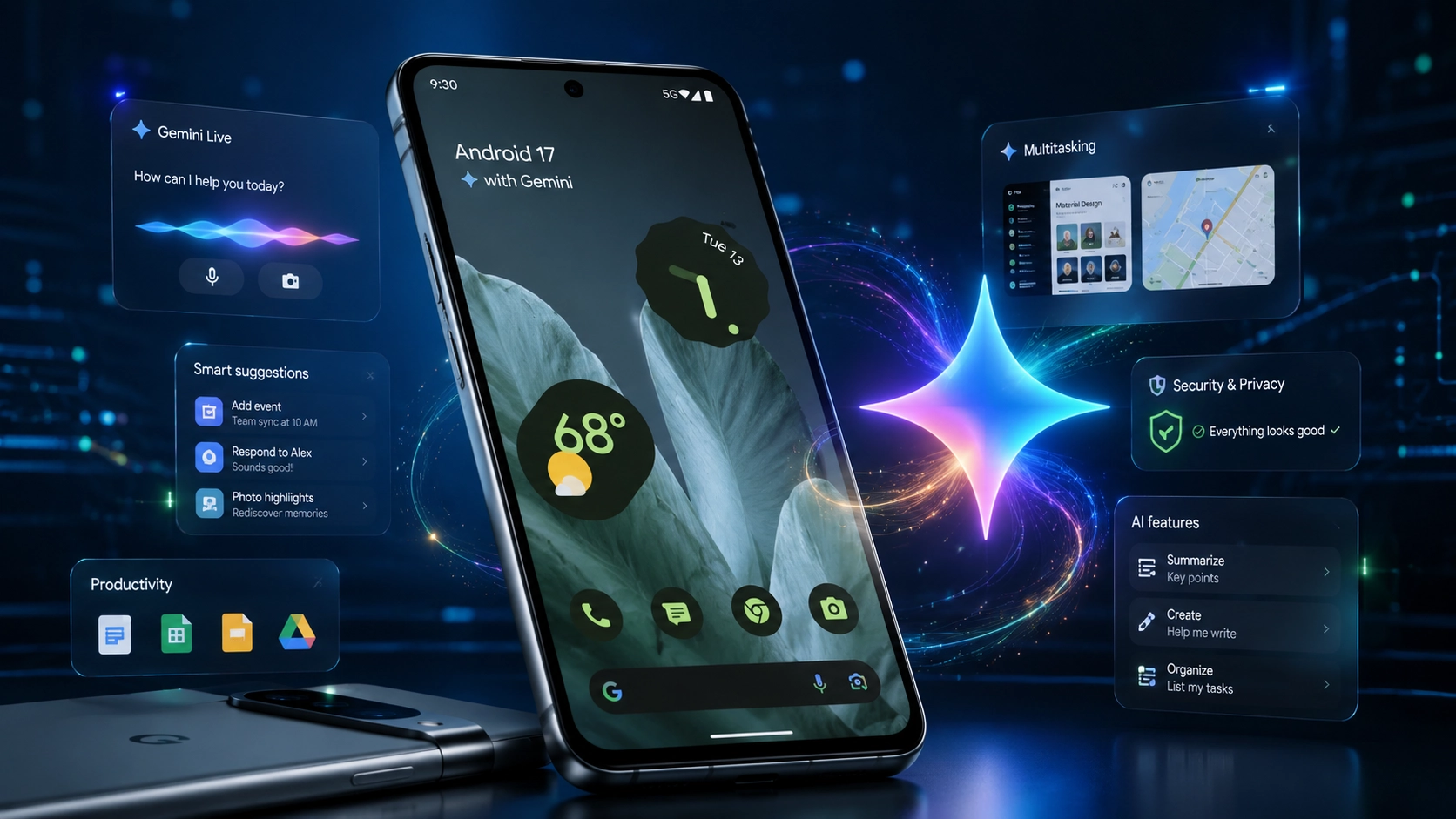
Google has started rolling out Android 17 to eligible Pixel phones, bundling AI tools, multitasking improvements, creator features, and security upgrades into a single release. As usual, Pixel gets it first, which means these features will gradually trickle out across the rest of the Android ecosystem through 2026.
The rollout covers Pixel 6 and newer, as well as Pixel Fold and Pixel Tablet. Availability will still vary depending on region, carrier, and device; that’s just how Android updates work, but this marks the official move out of beta and into the stable release after months of testing.
Android 17 isn’t trying to reinvent the phone with some dramatic visual overhaul. It’s more interested in making the thing you already use every day work a little better. Multitasking, AI assistance, screen recording, privacy, and performance are where most of the real changes are concentrated. In practice: faster app switching, more useful creative tools, and tighter security.
The Bubbles update is probably the most noticeable change here. Google is expanding floating app windows to make multitasking feel less clunky, especially on larger screens like foldables and tablets. Instead of constantly jumping between full-screen apps, you can keep a conversation or a quick task floating in a bubble while you do something else. It’s a small thing on paper, but it makes the phone feel much more flexible if you’re juggling messaging, work, and media throughout the day.
There’s also a new feature called Screen Reactions, aimed at people who record their screen for tutorials, reactions, or social content. It layers a selfie-style video feed on top of whatever you’re recording, making that kind of content easier to produce without a separate app. It’s part of a broader trend where phones aren’t just running apps anymore; they’re becoming the actual production tool.
AI Becomes More Central to Pixel
AI is the other big focus, tied closely to the latest June Pixel Drop. Pixel users are getting more Gemini-powered features baked into video, music, and image editing. Google’s Gemini is clearly becoming less of a standalone app and more of a layer running underneath the whole Android experience.
That includes new creative tools through Gemini, as well as text-to-video and music generation on supported devices. The direction here is pretty clear: Google wants AI to be something you use constantly while creating and editing content, not just something you chat with occasionally.
This comes at a moment when the broader industry is still arguing over how much AI capability should be released openly versus restricted. For more on that debate, see our coverage on AI model restrictions.
Security gets real attention too. Google is tightening privacy controls, device protections, and parental controls, which matters more than it used to, given how much of someone’s actual life now lives on their phone. Banking, messages, work accounts, photos, location history. An Android update has to add features, sure, but it also has to make the phone harder to break into or misuse.
The parental control improvements are worth flagging for anyone with kids. Google keeps building out better visibility into screen time, app access, and usage habits for parents. It’s not the flashy part of the update, but it’s the part that a lot of families will actually notice day-to-day.
Performance also got attention, even though it’s the least visible part of the release. Reliability fixes, battery behavior, connectivity tweaks, general responsiveness, boring stuff that nonetheless matters a lot for how the phone actually feels to use. New features mean nothing if the phone lags when getting to them.
Foldables are clearly part of the thinking here as well. Google’s been pushing Android to behave less like a stretched-out phone interface on bigger screens, and Android 17 keeps nudging in that direction with better multitasking and gaming support. As foldables become more common, that distinction matters more.
For Pixel owners, this isn’t a flashy redesign. It’s a genuinely useful update, more practical, more AI-integrated, more secure. For Google, it’s another step toward tying Android more closely to Gemini, bigger screens, and content creation tools.
The bigger picture is that Android isn’t really competing on customization options anymore. It’s competing on how smart it feels, how secure it is, and how well it helps you move between work, creativity, and everything else without friction. Android 17 is Google trying to make Pixel feel less like a static device and more like something that adapts to you.
Whether any of this actually lands depends on execution, as always. AI features need to be genuinely useful rather than gimmicky, multitasking needs to feel intuitive rather than fiddly, and security upgrades can’t make the phone more annoying to use day-to-day. If Google threads that needle, this could end up being one of the more practical Pixel updates in a while.
0 Comments