


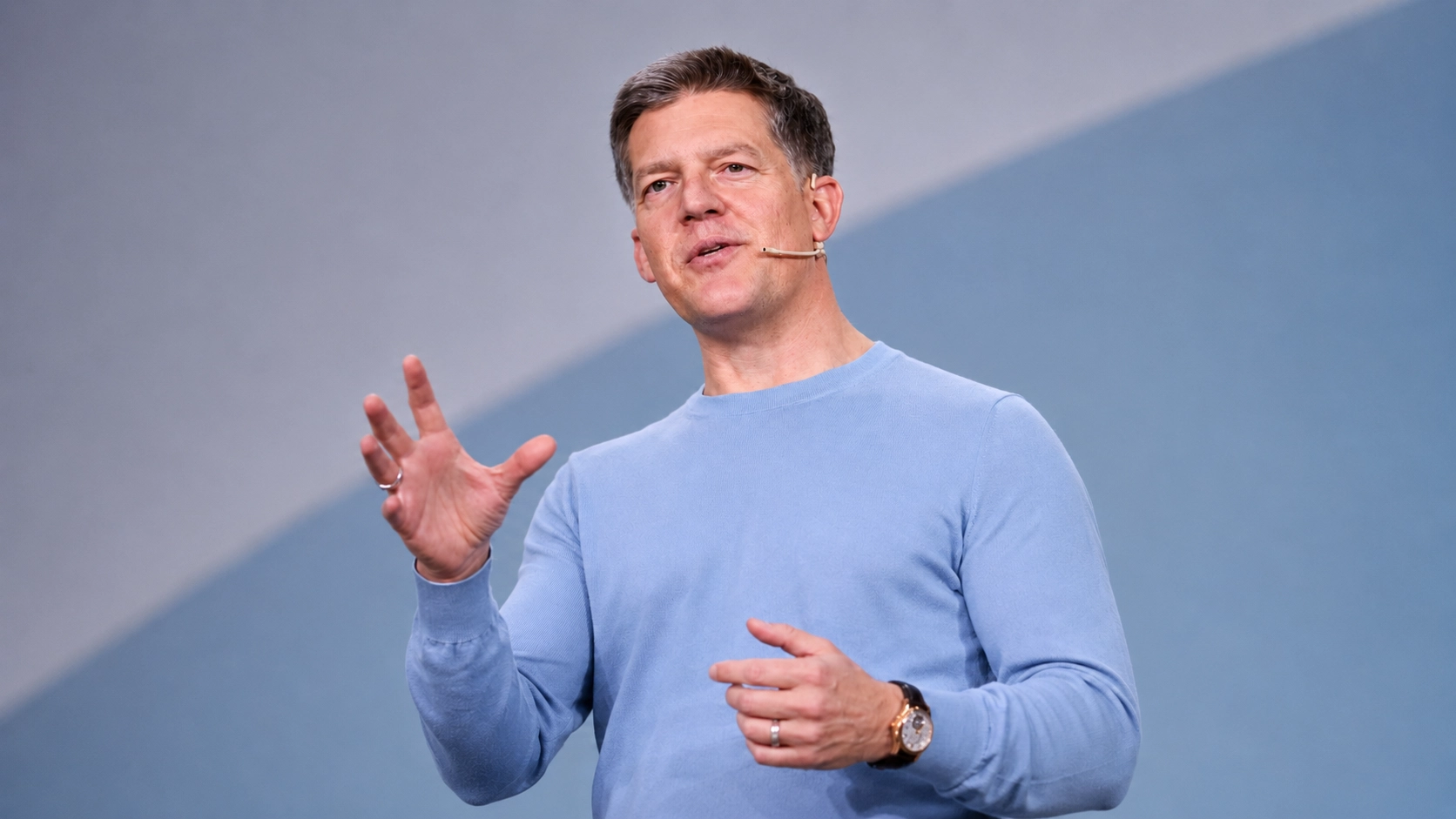
SpaceX has added veteran investor Roelof Botha to its board just days after the company’s record-setting public debut, a move that says a lot about where SpaceX’s priorities sit now that it’s actually answerable to shareholders.
According to a new SEC filing, Space Exploration Technologies Corp. elected Botha as an independent director on June 16, 2026, and put him on the audit committee. That committee assignment matters more than it might sound, given how much scrutiny SpaceX is suddenly under from regulators, analysts, and shareholders it didn’t have to answer to a month ago.
This isn’t some random outside hire either. Botha is one of the more recognizable names in venture capital, known for his long run at Sequoia Capital and, before that, his stint as CFO of PayPal. That PayPal history adds a layer of meaning here, since it ties him directly back to Musk’s earliest business circle. SpaceX is obviously a different animal now than PayPal was in the early 2000s, but there’s something almost full circle about two people from that same era ending up in the same boardroom again.
The timing is the whole story, really. SpaceX just completed the largest IPO ever, raising roughly $75 billion before underwriters even exercised their additional share options. That debut turned the company into one of the most closely watched names on the public markets, with investors essentially betting on Starlink, launch dominance, Starship, NASA contracts, and the broader future of commercial space all at once.
For more on how that debut played out, see our earlier coverage of SpaceX’s historic IPO market debut.
Why Botha’s Board Seat Matters
This appointment lands at a moment when SpaceX genuinely needs to prove it can operate like a public company, not just a very large private one. Operating privately lets SpaceX move fast with minimal reporting requirements, and that speed is a big part of how it became the dominant force in commercial launch and built Starlink into a global network.
Public markets don’t really work that way. Investors expect tighter financial controls, real disclosure, and a board that can actually manage risk across multiple high-stakes businesses simultaneously. SpaceX isn’t just launching rockets anymore; it’s a broadband provider, a defense contractor, a NASA partner, and a company still trying to get Starship fully operational while keeping one eye on Mars.
That’s exactly why the audit committee placement matters more than the headline. Audit committees exist to oversee financial reporting and internal controls, and putting Botha there signals SpaceX wants someone with real financial credibility sitting close to that part of the business.
He’s got the resume for it. At PayPal, he helped steer a fast-growing company through a genuinely high-pressure financial period. At Sequoia, he spent years backing and advising companies across tech, fintech, and consumer internet, which means he’s seen plenty of fast-moving companies hit the wall that comes with having to answer to public shareholders.
There’s also an optics angle here for Musk. He’s still the face of the company and always will be, but public investors tend to want independent directors who bring outside judgment and discipline to the table, something that doesn’t always come naturally to a founder-led company moving at SpaceX’s pace. Botha’s presence is the kind of thing that can quietly reassure investors that governance is being taken seriously post-IPO.
None of SpaceX’s actual challenges have gone anywhere, of course. Starship is still expensive, still technically hard, and still central to where the company needs to go both commercially and for government missions. Starlink has real growth ahead of it but also real competition and infrastructure costs that aren’t shrinking. And SpaceX still has to keep delivering for NASA while juggling everything else on its plate.
It’s a strange mix of businesses to run under one roof, part tech company, part aerospace manufacturer, part telecom, part national-security contractor. Very few public companies straddle that many sensitive, capital-intensive sectors at once, which is precisely why board oversight matters so much more now than it did when SpaceX could operate quietly as a private company.
What this appointment really reflects is SpaceX trying to grow up a little without losing the speed and risk tolerance that made it successful in the first place. The company built its reputation by moving faster than legacy aerospace players and betting hard on reusable rockets before anyone else took it seriously. Now it has to pair that same instinct with the kind of transparency public markets actually demand.
For investors, Botha’s arrival is a reasonable signal, even if it doesn’t answer every question about valuation or execution risk. It’s one credible voice added to a board that’s now operating under a level of attention SpaceX has never dealt with before.
More broadly, this is a reminder that SpaceX’s public chapter is going to be judged differently from its private one ever was. Rockets and bold timelines got it this far. From here, quarterly results, governance, and whether it can turn enormous ambition into something that actually shows up on a balance sheet will matter just as much.
A board appointment like this can look like routine paperwork on the surface. But it’s really SpaceX acknowledging that the rules changed the moment it went public, and that it needs people in the room who understand exactly what those new rules require.
The rockets will continue to define how the public sees SpaceX. From here on, though, governance is part of the story too.
0 Comments