


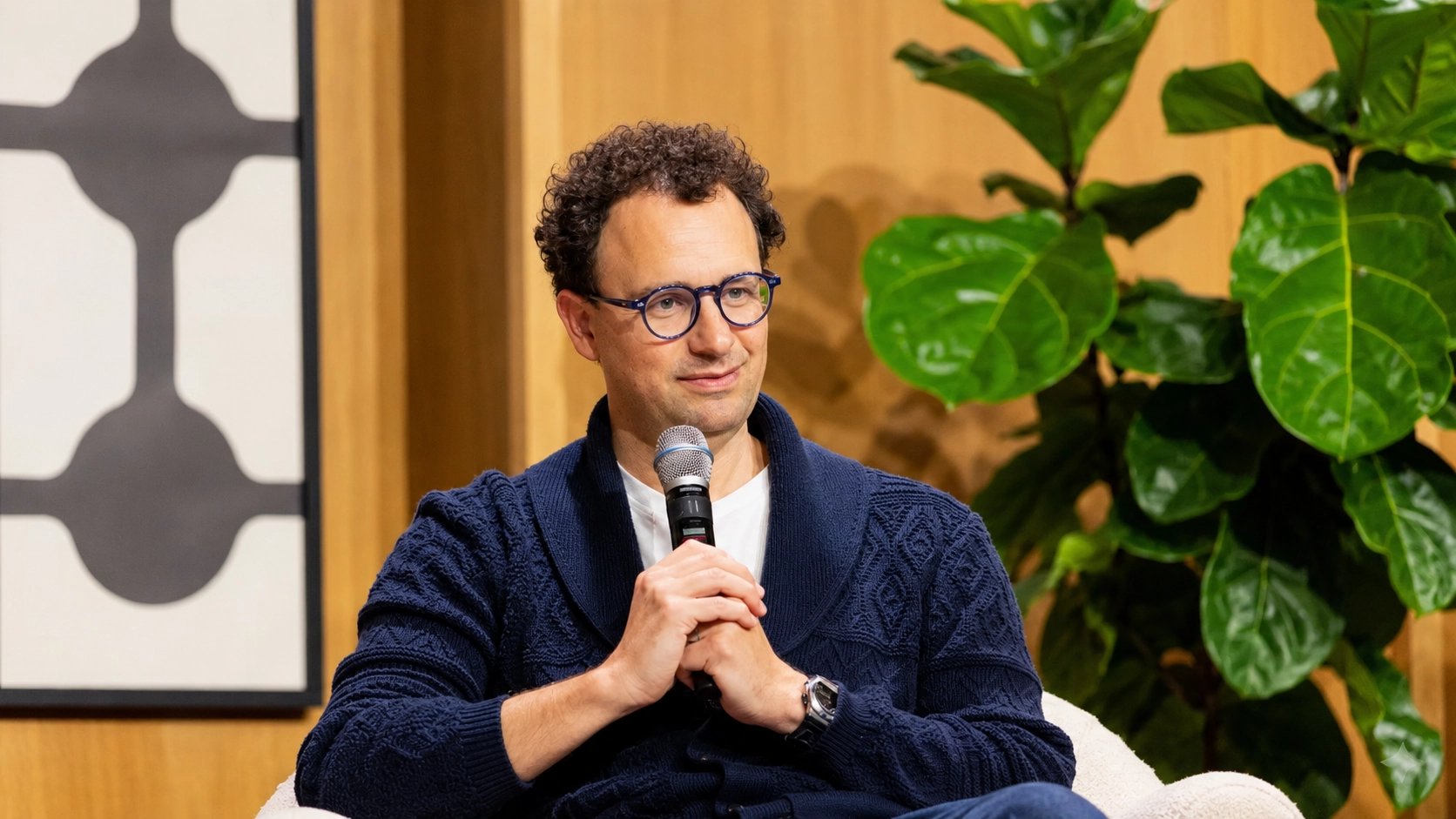
Noam Shazeer, one of the most influential figures in modern AI, is leaving Google to join OpenAI, and it’s one of the biggest talent moves the AI industry has seen. His departure stings particularly because Shazeer was serving as a co-lead of Google’s Gemini models, the company’s most important answer to ChatGPT and the centrepiece of its AI comeback.
The timing is awkward for both companies. Google has been working to prove Gemini can compete at the top of the market. OpenAI is reportedly preparing for an IPO. Adding Shazeer gives OpenAI not just a respected researcher but someone whose work helped lay the groundwork for the large language model era itself.
Shazeer isn’t just another senior engineer. He was one of the authors of the landmark 2017 paper “Attention Is All You Need”, which introduced the Transformer architecture that now sits under nearly every major AI system in existence. That research made modern generative AI possible; it influenced ChatGPT, Gemini, Claude, Llama, and most of what followed.
His career also illustrates how heated the AI talent war has gotten. Shazeer spent years at Google, left to co-found Character.AI, then returned to Google in 2024 when the company struck a major deal tied to Character.AI’s technology and people. That return was treated as a significant win for Google at the time. Less than two years later, his move to OpenAI lands as a significant blow.
A Major Loss for Gemini and a Big Win for OpenAI
For Google, this isn’t just about one executive walking out the door. It’s about losing a symbolic figure at a moment when Gemini is supposed to prove the company can lead the next generation of computing, not just defend what it already has. Google has been pushing AI deeper into Search, Workspace, Android, Cloud, and developer tools. Gemini is the thread connecting all of it.
That’s what makes Shazeer’s exit uncomfortable. Google has the infrastructure, the research history, and the distribution reach to remain a serious AI force. But the AI race increasingly runs on speed, culture, and talent. OpenAI, Anthropic, Meta, xAI, and others are competing aggressively for the researchers and engineers who can actually push model performance forward, and right now, those people have options.
For OpenAI, the hire strengthens its position at a critical moment. The company already leads public attention through ChatGPT, but it’s also under pressure to keep its models improving, grow enterprise use, manage safety concerns, and justify the valuation expected around an IPO. Bringing in someone like Shazeer sends a clear message to investors and competitors: OpenAI is still pulling the people who helped build this field in the first place.
The timing matters for another reason, too. OpenAI’s business has grown far beyond what it was even two years ago. It’s no longer purely a research lab; it’s building products for consumers, developers, enterprises, and governments. Readers following OpenAI’s scale can also check our related coverage on OpenAI’s usage at scale.
Shazeer’s move also raises questions about Google’s approach of using large deals to pull AI talent back into its orbit. The 2024 arrangement around Character.AI brought him and others back, but this departure shows that expensive talent deals don’t guarantee anything long-term. Top AI researchers now have real leverage; their work can influence products worth hundreds of billions of dollars, and they know it.
That’s why the talent war has become almost as important as the model race itself. Companies are competing on chips, data centers, training budgets, and distribution, but also on whether they can attract the people capable of designing the next breakthrough. The best AI researchers are increasingly treated less like employees and more like strategic assets.
For Google DeepMind, the immediate task is showing that Gemini’s roadmap stays strong without Shazeer. The company still has world-class researchers and engineers, and Google is one of the few organizations with the compute, data, and platform reach to compete with OpenAI at scale. But high-profile departures create pressure, especially when the person leaving was co-leading the flagship model effort.
For OpenAI, the challenge is different. It needs to integrate Shazeer into an already strong research and product organization while keeping momentum. One hire doesn’t guarantee model leadership, but it changes perception. In a market where investors, developers, and enterprise customers are reading every signal, perception is part of the competition.
The move also reflects something shifting more broadly in Silicon Valley. AI companies have become the new center of elite technical ambition. Researchers who once spent decades inside large tech companies now have more options, more leverage, and more reason to go where they think the next real breakthrough will happen.
Shazeer leaving Google for OpenAI is more than a personnel change. It’s a signal that the AI race is getting sharper. The companies with the biggest platforms are fighting the companies with the fastest momentum. The researchers who understand this technology at the deepest level are the most valuable pieces on the board, and they’re moving.
For Google, the loss will renew questions about how well it can hold its AI talent as the competition intensifies. For OpenAI, it adds to the story of a company heading toward the public markets while still pulling in some of the field’s most important minds.
The AI race has always been about models, compute, and products. Shazeer’s move is a reminder that it’s also about people, and in this race, one person can still shift the balance.
0 Comments