


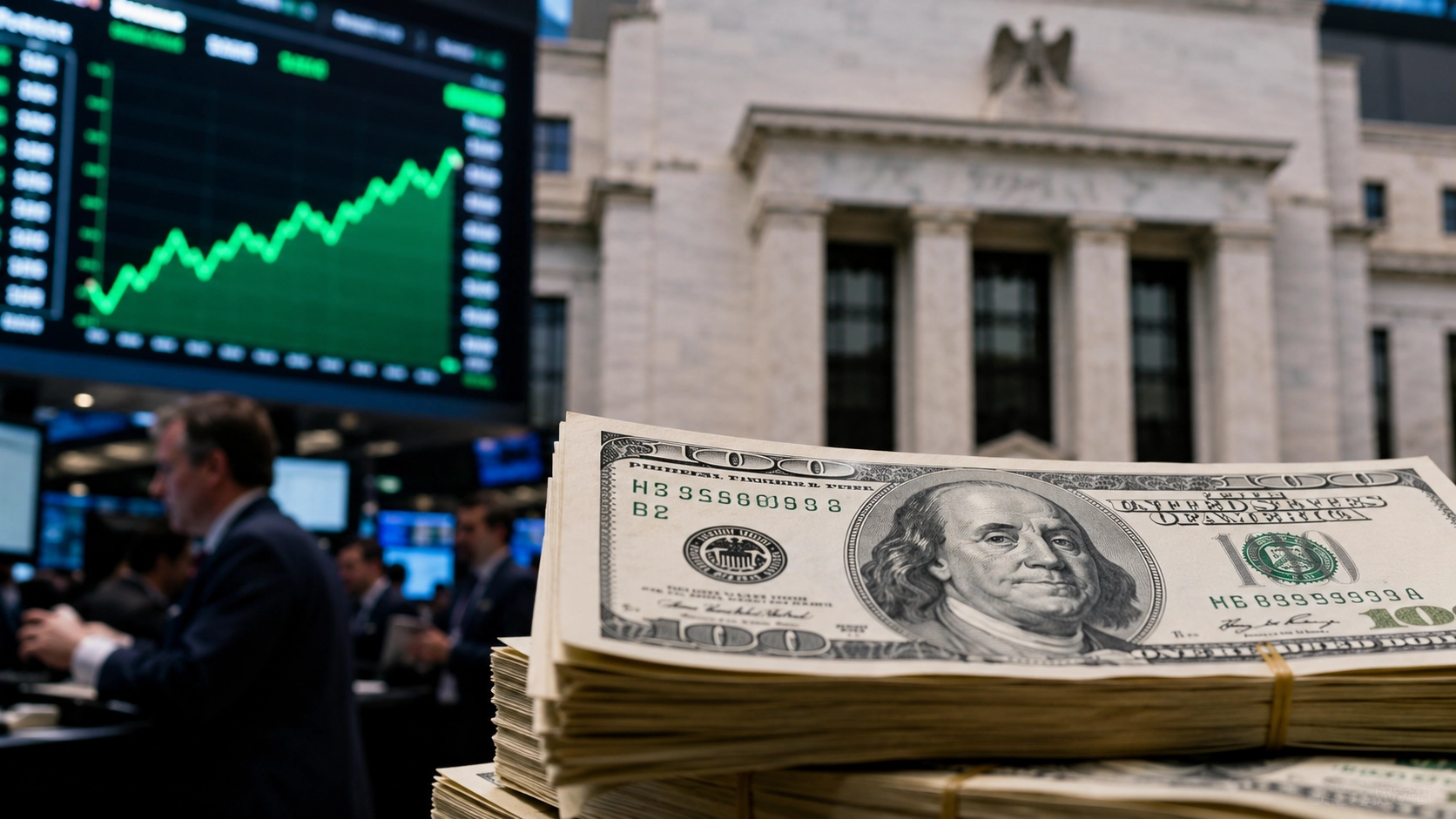
The dollar strengthened after the Federal Reserve left interest rates unchanged and made clear that inflation is still very much on its radar. The message to currency traders was simple enough: don’t expect rate cuts anytime soon, and the Fed may even need to hike again if price pressures don’t ease up.
The benchmark rate stayed in the 3.50% to 3.75% range, as no one was surprised. What actually moved markets was the tone. Rather than signaling any openness to easier policy, officials kept inflation risk front and center and left the door open to a future hike if prices stay elevated.
That was all it took. The US Dollar Index climbed as investors recalibrated their rate expectations. The euro weakened against the dollar, and the yen stayed under pressure, with traders zeroing in on the widening gap between US rates and Japan’s current policy stance.
This is fairly standard behavior for the dollar; it tends to gain when US rates look set to stay elevated, since dollar-denominated assets become more attractive relative to currencies backed by central banks that are closer to holding steady or cutting. The Fed’s inflation warning gave traders one more reason to think twice before betting against the greenback.
The timing here is notable too. Oil prices, Middle East tensions, and inflation data have all been whipping currencies, bonds, and stocks around lately. Some investors had hoped that cooling geopolitical risk and falling energy prices might give the Fed room to soften its stance. Instead, the central bank made it pretty clear it wants more convincing evidence that inflation is actually heading back toward 2% before it changes course.
What the Fed’s Decision Means for the Dollar
The dollar didn’t rally just because the Fed held rates; everyone already expected that. What actually moved the needle was the admission that inflation is still uncomfortably high and that policymakers aren’t ready to call it solved.
The Fed is navigating a genuinely tricky set of conditions right now. Growth has held up reasonably well; the labor market hasn’t softened enough to force the Fed’s hand on rate cuts; and inflation remains stubbornly above target. Add in higher energy costs earlier in the year and ongoing supply chain uncertainty, and the picture gets murkier rather than clearer.
That’s exactly the kind of situation that makes a central bank cautious. Cut too early and you risk reigniting inflation. Hold too long, and you risk choking off growth. Even raising rates again, which is now back on the table as a real possibility, sends a signal that the Fed thinks inflation is more entrenched than it would like. For currency markets, just the possibility of another hike is enough to keep the dollar supported.
It’s also a reminder of how fast sentiment can shift. Not long ago, many traders were positioning for the Fed to eventually pivot toward rate cuts. Now the conversation has shifted to whether rates need to remain elevated longer than expected. Currency markets live and die on exactly this kind of shift in expectations.
Bond markets told the same story. Treasury yields rose after the decision as investors priced in a tighter outlook than they’d been expecting. Higher yields tend to reinforce dollar strength, since they make US assets pay more relative to lower-yielding alternatives elsewhere.
The ripple effects extend well beyond currency traders. A stronger dollar makes imports cheaper for US consumers, but it creates real headaches elsewhere; countries carrying dollar-denominated debt face heavier repayment burdens, and capital tends to flow back toward the US and away from emerging markets when the dollar firms up. Commodities usually feel it too, since most are priced in dollars.
For companies, it depends entirely on where the business sits. US firms with significant overseas revenue can take a hit when foreign earnings get converted back into a stronger dollar. Importers benefit. Exporters find their goods getting pricier and less competitive abroad. It’s the same dynamic playing out across industries, just with different winners depending on which side of the trade you’re on.
This all connects to the broader market reaction unfolding around oil and geopolitical risk right now. For more on that, see our coverage of the recent global market reaction.
For the moment, the dollar’s strength tells you investors are taking the Fed’s inflation warning at face value. Even if inflation does cool off later in the year, policymakers don’t seem inclined to rush toward easier conditions just because the data looks a bit better for a month or two.
The open question is what happens from here. If inflation data starts improving, the dollar could lose some of this momentum as rate-cut expectations creep back in. If inflation remains sticky, the dollar is likely to be supported by higher yields and the lingering possibility of another hike.
The Fed didn’t surprise anyone with the rate decision itself. What it did do was remind markets that the inflation fight isn’t finished, and that was enough to keep the dollar in demand and put global currency markets back on edge.

0 Comments