


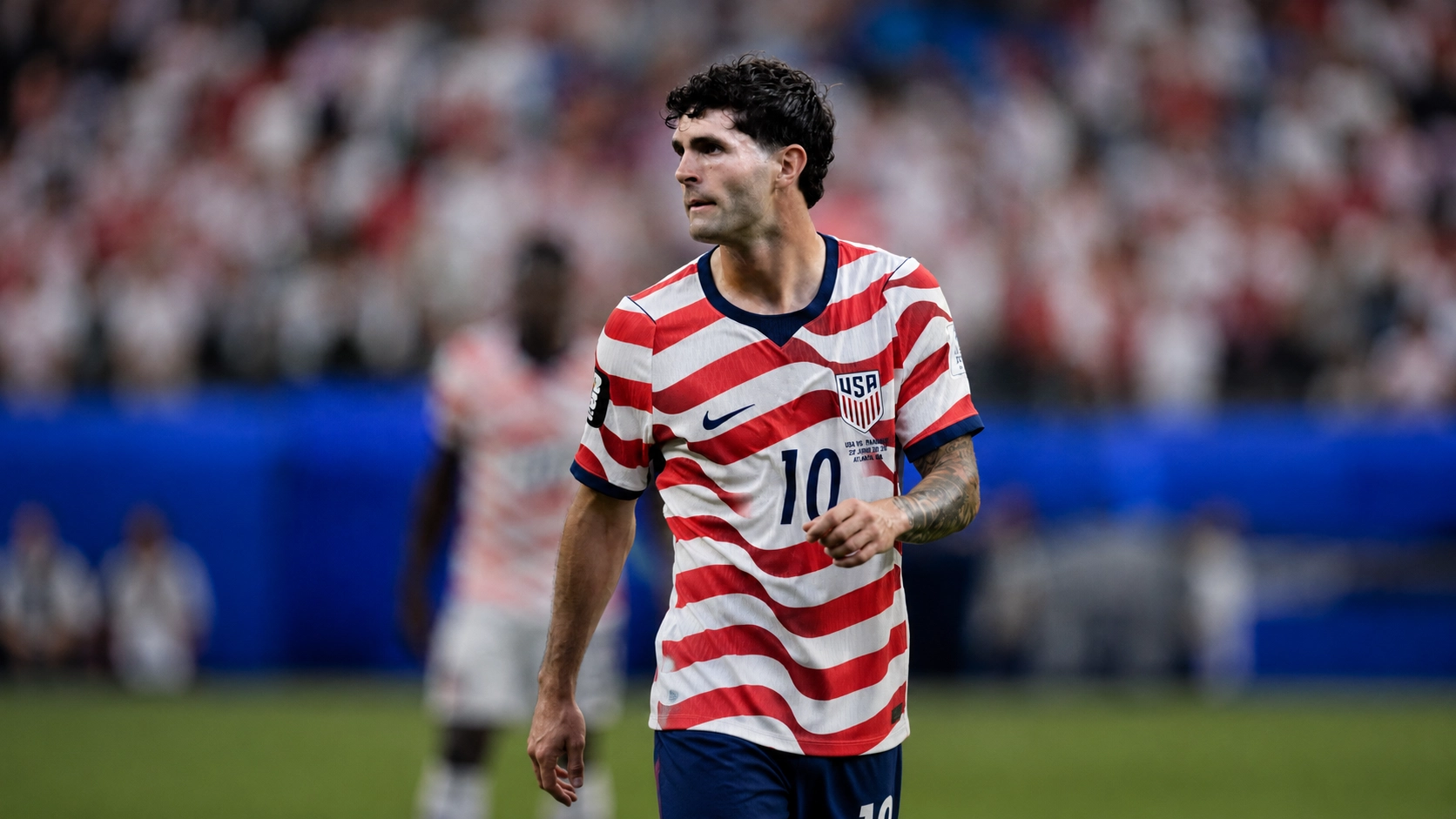
The United States walked into one of its biggest early tests of the FIFA World Cup 2026 without the player they most wanted available. Christian Pulisic was ruled out of the Group D clash against Australia due to a calf problem, turning an already important match into a genuine examination of whether this US squad can cope when things don’t go to plan.
Pulisic had been managing the injury since being pulled at halftime during the opening win over Paraguay. He trained separately from the group in the build-up, and head coach Mauricio Pochettino held off on a final decision until the last possible moment. In the end, the staff chose caution, Pulisic stayed out, Ricardo Pepi came into the starting lineup as the only change, and the rest of the squad was left to pick up the slack.
The significance of that call is hard to overstate. Pulisic is the emotional and creative center of the US men’s national team. His ability to carry the ball, take on defenders, and create danger in tight spaces isn’t easy to replace at the best of times, let alone in a must-win group game against a well-organized, physical Australian side.
The stakes in Group D were already high before a ball was kicked. Both teams had won their openers, so whoever came out on top here would take a significant step toward the knockout stage and potentially a much more favorable path through the bracket. For the US, doing it at home added another layer of pressure. This wasn’t just about points. It was about proving the team could handle adversity in front of its own fans without leaning on its biggest name.
A Depth Test for Pochettino’s USA
The lineup Pochettino put out showed he trusted the broader squad to deliver. Matt Freese in goal, with Alex Freeman, Chris Richards, Tim Ream, and Antonee Robinson across the back. Tyler Adams, Weston McKennie, Sergiño Dest, and Malik Tillman in midfield. Ricardo Pepi and Folarin Balogun are leading the attack.
Without Pulisic, the US needed more from its forwards in terms of movement, more direct running from the wide areas, and better midfield support pushing into attacking positions. Pepi gave the attack a more traditional central presence, while Balogun’s pace was always going to be important for stretching Australia’s defensive shape.
Australia came into the game with real confidence after a 2-0 win over Turkey in their opener. The Socceroos had shown they could hurt teams physically and tactically, and they weren’t going to sit back and absorb pressure just because they were playing the hosts. Patrick Beach continued in goal ahead of veteran Mat Ryan, and Harry Souttar wore the captain’s armband.
Their approach was predictable in the best possible way: stay compact, make the US midfield work hard for every inch, defend set pieces well, and wait for moments to hurt the home side on the counter or from dead balls. Against a US team missing its main creative threat, that’s a pretty sensible game plan.
The Pulisic situation also raised a broader question about tournament management that Pochettino had to balance in real time. In a short group stage, every call matters. Bringing a key player back too early risks making a minor problem a serious one. Leaving him out of a game this big has its own cost. It’s a genuinely difficult call, and there’s no clean answer.
But that’s also exactly what separates good World Cup teams from great ones. Tournaments are full of injuries, suspensions, and moments where the plan falls apart. The teams that go deep are generally the ones that can absorb those disruptions and keep winning anyway.
The early stages of this tournament have made that point hard to miss. Disciplined, organized sides have been causing problems for stronger opponents all over the competition. Reputation and possession don’t guarantee anything. For a full look at how all 48 teams are shaping up, see our guide to all 48 teams at the World Cup.
For Pulisic, the focus now shifts entirely to recovery. The US will be hoping the calf issue is manageable enough that he’s available for the rest of the group stage and whatever comes after. His return would immediately raise the team’s attacking ceiling; the difference between Pulisic on the pitch and off it is that noticeable.
But the Australia match was never really about finding a direct replacement for him. It was about whether this US squad has enough structure, collective quality, and belief to get a result when the circumstances aren’t ideal. World Cups don’t care about your best-case scenario. Contenders show themselves in the moments when something important goes wrong.
Pulisic’s absence made this one of those moments. It also gave everyone else on the roster a chance to show that this team is more than one name.
0 Comments