


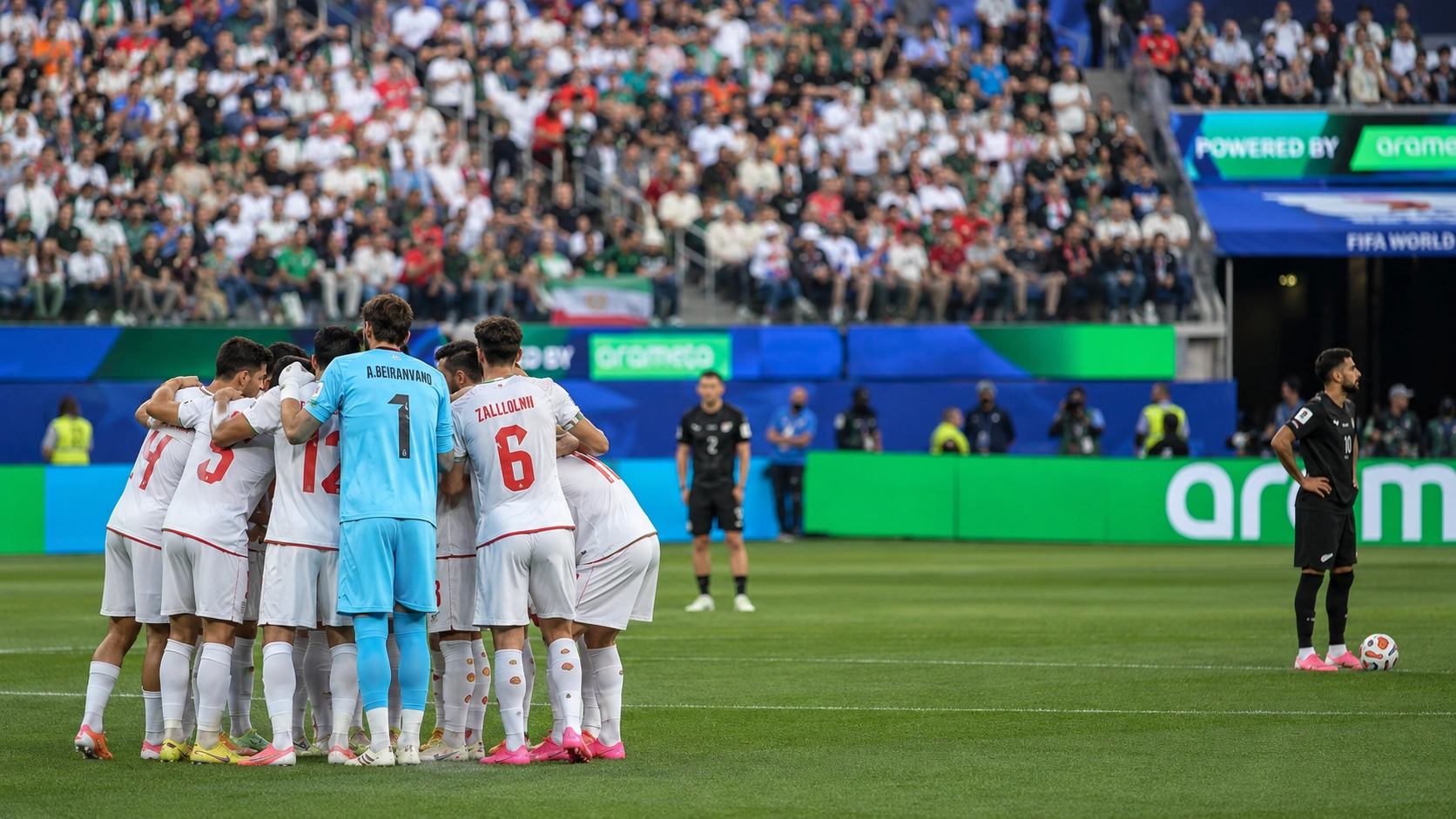
Iran’s World Cup opener turned into a story about logistics almost as much as football, after the team was reportedly told to leave the United States immediately following their match against New Zealand. What should have been a straightforward night of football turned into a wider conversation about travel restrictions, recovery time, visas, and the political pressure already surrounding one of this tournament’s more sensitive teams.
Iran opened their FIFA World Cup 2026 campaign with a 2-2 draw against New Zealand at SoFi Stadium in LA. On the pitch, a hard-fought result. Off it, the story shifted fast once head coach Amir Ghalenoei revealed his players had been told to leave the US and head back to their base in Tijuana without proper time to recover.
Ghalenoei wasn’t subtle about his frustration. He called Iran perhaps the “most oppressed” team at the tournament, pointing to the punishing travel schedule, the forced relocation away from their original base, and missing backroom staff thanks to visa complications. For a squad already carrying heavy political attention into this World Cup, getting moved across the border right after the final whistle was the last thing they needed.
Iran’s setup here is genuinely unusual. Their group games are in the US, but the team is based across the border in Mexico, meaning constant travel back and forth during exactly the part of a tournament where rest matters most. Captain Mehdi Taremi backed up the concern, saying the squad had already dealt with long checks and delays just getting to the match in the first place.
Travel Chaos Overshadows a Fighting Draw
What makes this worse is that Iran actually delivered on the pitch. Fighting back for a 2-2 draw in a politically charged opener is no small thing, and it kept them alive in Group G. But there was barely time to enjoy it before the travel order overshadowed everything.
Recovery after a World Cup match isn’t optional: medical checks, treatment, media duties, food, rest, tactical review. Getting told to travel immediately cuts into all of it, and that matters even more when the next match is right around the corner.
That’s really what Ghalenoei’s complaint comes down to. It’s not just an inconvenience. It’s fairness. If one team is bouncing between countries while everyone else settles comfortably into their host city, the preparation gap widens, and in a tournament this tight, those margins decide things.
It also puts FIFA and the tournament organizers in an awkward spot. Running a World Cup across three countries was always going to create logistical headaches, but Iran’s situation looks different from the usual travel grumbles. Political tensions and visa restrictions appear to be directly shaping where the team can stay, who’s allowed to travel with them, and how long they’re permitted to remain in the US.
Anyone trying to keep track of how all 48 teams fit into this expanded format can check our World Cup team guide.
There’s a bigger question hanging over all this too: whether football can stay separate from politics at a tournament this size. Iran’s involvement was already a sensitive subject before the World Cup even started, given the broader tensions between the US and Iran. None of that disappeared once the tournament kicked off. It just became something the team has to navigate daily, alongside the actual football.
For Iran, the challenge now is staying focused on the football itself. The draw against New Zealand proved the players can compete despite a genuinely difficult build-up. But missing staff, constant border crossings, and uncertainty about their own movement could become real problems the longer the group stage goes on.
There are big matches still to come, and every point counts. If the frustration ends up galvanizing the squad, this could pull them closer together. If the travel disruption keeps happening, it’s going to chip away at preparation and performance in ways that are hard to fully recover from.
For now, Iran’s opening night will be remembered for more than just the scoreline. It captured something true about this tournament, the emotional weight teams carry, the limits of even the best-planned logistics, and the way politics has a habit of following a team straight onto the pitch.
Iran left LA with a point on the board. They also left with a clear message from their coach: the fight for fairness off the pitch might end up being just as hard as the fight for results on it.

0 Comments