


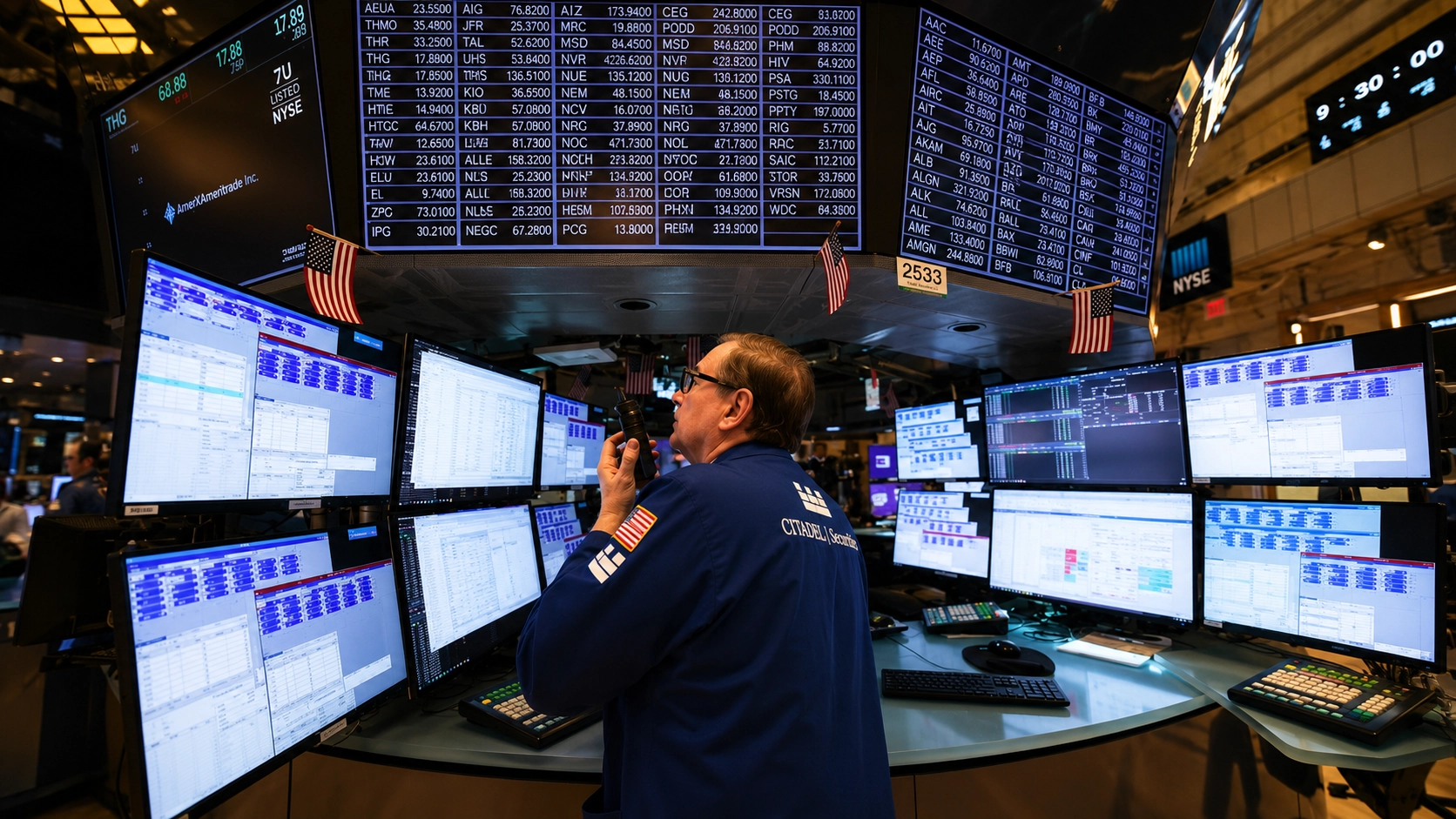
Wall Street moved higher on Monday as a renewed rally in chip stocks lifted the Nasdaq Composite and S&P 500, keeping investor enthusiasm around AI and semiconductor demand alive.
The Nasdaq rose 0.92%, and the S&P 500 gained 0.42%. The Dow Jones Industrial Average slipped 0.26%, dragged by weakness in non-technology names.
Semiconductor shares led the day, bouncing back after a rough stretch. The Philadelphia Semiconductor Index climbed more than 4%, supported by gains across major chipmakers and renewed optimism about AI data-center demand.
Broadcom was one of the strongest performers after extending its custom chip partnership with Apple through 2031. The deal gave investors a concrete reason to feel better about demand for specialized AI and data-center chips, exactly the kind of signal the sector needed after recent pressure.
Chip shares had been under strain as investors questioned whether the enormous spending on AI infrastructure would eventually show up as real profits. Monday’s move suggested that clear demand signals can still quickly pull buyers back in.
AI-related chips, memory products, and custom silicon have become the market’s main growth story this year, and for now that story is holding.
The broader market got support from expectations that second-quarter corporate earnings could stay strong. Investors are watching results from Delta Air Lines, PepsiCo, Samsung Electronics, and SK Hynix later this week.
Samsung and SK Hynix carry particular weight for the AI trade; both are major suppliers of memory chips used in advanced computing systems. Strong numbers from either company would reinforce the view that AI-related demand is still driving the semiconductor cycle rather than plateauing.
Last week’s softer US jobs report is also still doing work in the background. Weaker payroll data reduced expectations for another aggressive move from the Federal Reserve, which gave tech stocks room to breathe. Lower or more stable rate expectations make future earnings from growth companies more attractive, supporting valuations for AI and chip names priced on long-term projections.
The rally wasn’t broad, though. The Dow lagged, and defensive and consumer-linked stocks stayed under pressure. Investors are still being selective, rewarding companies tied directly to AI infrastructure and pulling back from everything else.
Microsoft was a notable exception to the day’s optimism. Shares fell after the company announced another round of layoffs affecting about 2.1% of its workforce. It added to a pattern: even large tech companies are cutting costs with one hand while spending heavily on AI with the other. The market is fine with that tradeoff for now, but it wants to see AI spending start producing real returns, not just bigger expense lines.
Oil was little changed, with Brent crude trading around $72 a barrel after OPEC+ agreed to increase output in August. Stable energy prices eased some inflation concern, though traders are keeping an eye on risks in the Middle East and shipping routes near the Strait of Hormuz.
The dollar strengthened modestly, and gold slipped after its recent rebound; both moves are consistent with investors rotating back toward risk assets as the chip rally gave markets fresh momentum.
Readers following the wider semiconductor trend can also check our coverage of chip demand.
Earnings season is the next real test. Investors want to see AI demand reflected in revenue growth, stronger margins, and durable guidance across technology, cloud computing, and semiconductors, not just optimistic projections.
If chip companies keep delivering, the Nasdaq and S&P 500 have room to extend. If earnings disappoint relative to stretched valuations, the rally could face pressure quickly.
For now, Monday’s session showed the AI trade still has legs. Chip stocks are leading again, and investors are still willing to bet that semiconductor demand stays at the center of wherever markets go next.

0 Comments