


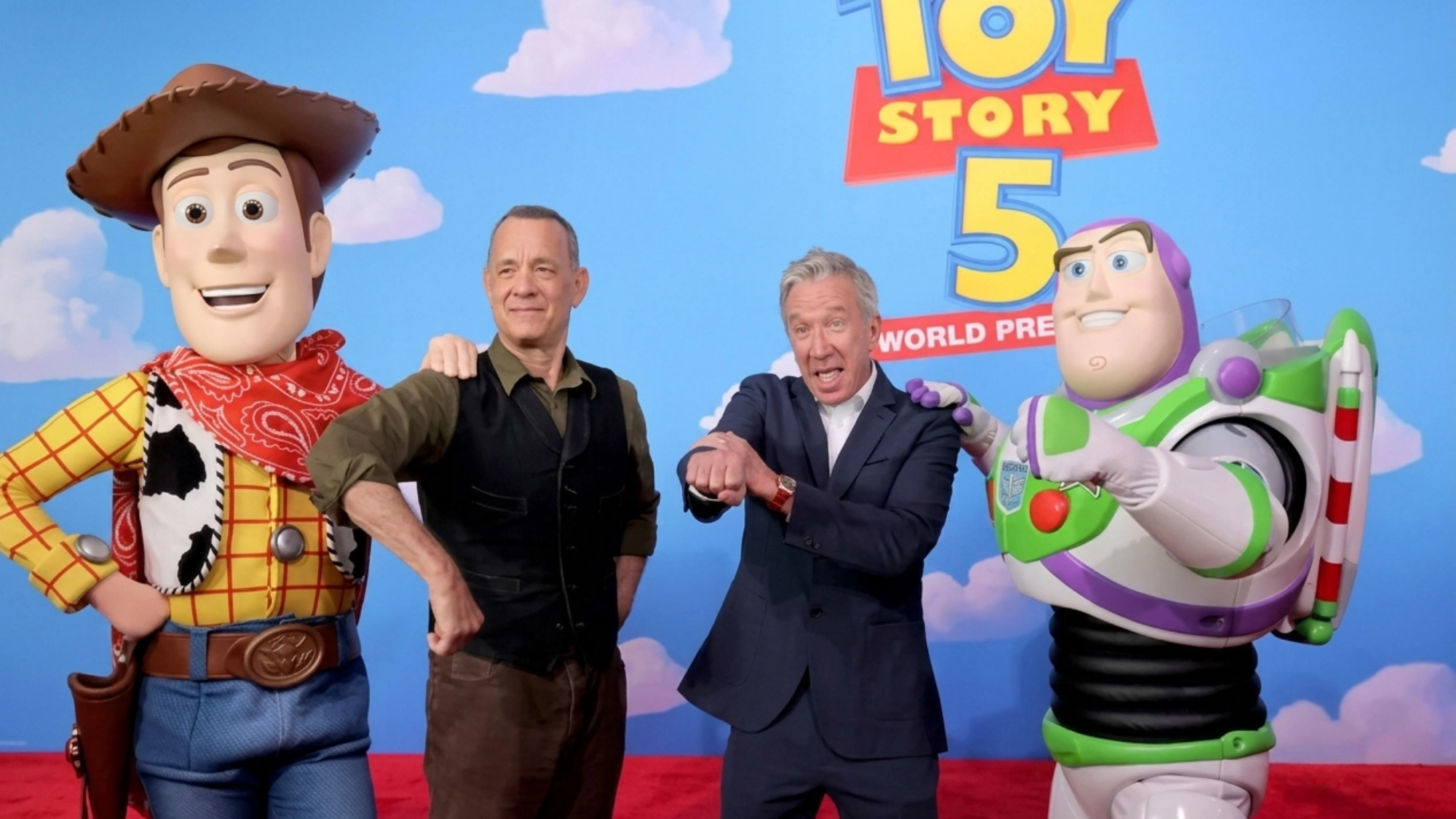
Toy Story 5 just had the biggest domestic opening weekend of 2026, and it wasn’t particularly close. Nearly three decades after the original film quietly revolutionized Hollywood animation, the franchise still knows how to fill a theater.
The fifth entry in the Toy Story series pulled in $160 million in North America over its opening weekend and another $152 million internationally, landing at $312 million globally. That’s the strongest launch in franchise history and a genuinely meaningful moment for Pixar after a post-pandemic stretch that’s been uneven at best for animated films.
The result matters beyond the raw numbers. Toy Story 5 wasn’t just another sequel greenlit because the IP still had name recognition; it was a test of whether older family franchises can still get people off their couches and into a cinema in significant numbers. This weekend’s answer was a pretty clear yes. Families, longtime fans, and younger viewers all showed up, beating expectations and setting a new bar for the year.
Andrew Stanton directs, with Kenna Harris co-directing. Tom Hanks, Tim Allen, and Joan Cusack are all back voicing Woody, Buzz, and Jessie, which gives the film the emotional continuity fans expect. But the story moves somewhere new, into the reality of how children’s attention has shifted away from traditional toys toward screens and devices.
Pixar Turns Nostalgia Into a Modern Box Office Win
The film’s central conflict is built around that idea. Bonnie, now older, gets drawn toward a tablet-like device called Lilypad, and that creates a new kind of threat for the toys, not a villain in the traditional sense, but something more familiar and a lot harder to fight. What happens to imagination, play, and childhood friendship when a screen is always more interesting than a toy box?
It’s a smart angle, and it seems to have landed well with both halves of the audience. For parents who grew up watching the original films, Woody and Buzz coming back carries real weight. For kids, the screen-time story is basically their actual life. That combination is tricky to pull off and genuinely hard to fake. When it works, it’s the difference between a sequel that feels necessary and one that feels like a cash grab.
The box office performance also says something about the theatrical market more broadly. It’s been inconsistent for years, with plenty of major releases struggling to justify the trip to the cinema. But trusted animated franchises with the right emotional hook can still deliver event-level weekends. Toy Story 5 is a clear example of that.
For Disney, this is a significant boost. The company has been rebuilding theatrical momentum, and Pixar remains one of its most valuable creative brands. A record-breaking Toy Story opening gives Disney a proper summer headline and reinforces the argument that family-friendly releases still drive the box office in a way that’s hard to replace.
The context matters too. Inside Out 2 already helped rebuild confidence in Pixar’s theatrical future after a rough few years. These two films together suggest the studio’s strongest brands still work when audiences believe the story is worth seeing on a big screen rather than waiting for the streaming version.
That said, opening weekend is only the beginning. Toy Story 5 reportedly came with a large production budget, and to become one of the year’s genuine global hits, it needs to keep drawing families over several weeks as more summer competition arrives. A strong opening that fades quickly is a very different financial story from what Disney needs here.
The early signals are encouraging. Audience scores are strong, the family appeal is broad, and the Toy Story name carries emotional weight that’s hard to manufacture. Animated films tend to benefit from repeat viewings, school holidays, and word of mouth in ways that action films don’t, so Toy Story 5 may have real legs beyond its opening frame.
For more on what’s happening across the entertainment space, check out our latest entertainment coverage.
For Pixar, the lesson from this weekend is one the studio probably already knew: legacy franchises still matter, but only when they actually evolve. Toy Story 5 works because it doesn’t just replay what made the previous films work. It takes familiar characters and puts them in front of a genuinely modern problem, one that parents worry about, and kids live with every day.
That balance between nostalgia and relevance is what made the opening so strong. People didn’t show up just because Woody and Buzz are back. They showed up because the story gave them a reason to care about what happens to those characters in 2026.
After several years of questions about whether Pixar had lost its theatrical touch, this weekend delivered a pretty convincing counterargument. The toys are back. The audience followed. And Pixar has one of the biggest box office stories of the year.



0 Comments