


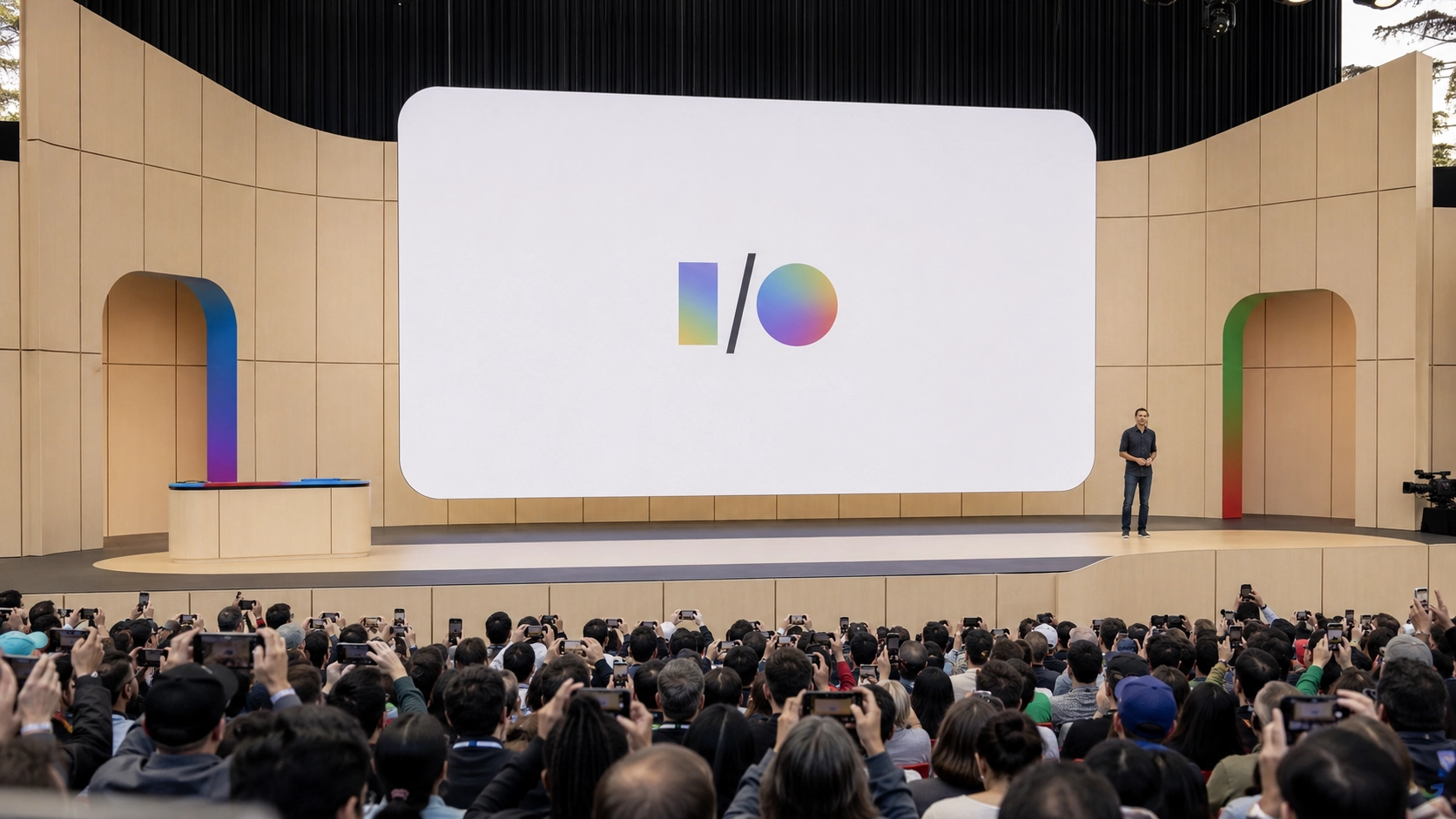
Google is stepping up its challenge to Nvidia as the AI chip race moves into a new phase. Nvidia has dominated the market for the powerful processors used to train and run advanced AI models for years now. Google is pushing harder to turn its custom Tensor Processing Units (TPUs) into a real alternative for companies looking to cut costs, secure more supply, and avoid leaning entirely on Nvidia’s GPUs.
The timing isn’t random. Demand for computing power has exploded as companies build bigger models, deploy AI agents, and serve millions of users through chatbots, search tools, coding assistants, and enterprise automation. That demand made Nvidia one of the most valuable companies in the world. It also gave customers and cloud providers a strong reason to start looking elsewhere.
Google has been building TPUs for more than a decade, originally just for its own internal AI workloads. What’s changed is the ambition. Google doesn’t want TPUs to stay an internal advantage anymore; it wants them to become a real cloud and infrastructure business that goes head-to-head with Nvidia-powered systems.
At Google Cloud Next 2026, the company introduced its eighth-generation TPU systems: TPU 8t for training and TPU 8i for inference. That split matters. Training is the expensive work of building AI models. Inference is running those models once people actually start using them. As AI moves from experimentation into everyday use, inference is becoming one of the most contested battlegrounds in chip design.
The AI Chip Fight Moves Beyond Training
Nvidia built its lead on more than powerful GPUs; it built a deep software ecosystem around CUDA, networking, and developer tools. That’s what makes it so hard to dislodge. Even when rivals offer cheaper or more specialized chips, customers often stick with Nvidia because the software stack just works and everyone already knows it.
Google understands hardware alone won’t cut it. That’s why it’s working to make TPUs easier for developers to use with popular AI frameworks. Native PyTorch support matters here because PyTorch is what most AI researchers and engineers already use. If Google can lower the friction of moving workloads from GPUs to TPUs, its chips become a real option for customers chasing better price-performance without rewriting everything from scratch.
Cost is shaping this fight too. Nvidia GPUs are in high demand, but they’re expensive and often hard to get. Large AI companies are spending billions on compute, and even small efficiency gains add up to serious money. Google’s pitch is that its vertically integrated stack, custom chips, cloud infrastructure, networking, and software can offer better economics for certain workloads than buying Nvidia hardware outright.
That’s why major AI customers are watching closely. Anthropic, Meta, and OpenAI have all explored or used Nvidia alternatives for parts of their infrastructure. The goal usually isn’t replacing Nvidia entirely; it’s building a more balanced hardware mix, so no single supplier controls the entire AI compute pipeline.
The timing also works in Google’s favor. The market is shifting from one centered mostly on training giant models to one increasingly focused on serving those models at scale. Inference needs speed, efficiency, smart memory management, and lower operating costs. TPU 8i is built for that world, one where AI agents need to respond fast, handle a flood of requests, and manage complex reasoning without choking.
Nvidia isn’t sitting still, of course. The company keeps expanding its roadmap and is targeting inference more aggressively, too. Its next-generation platforms, including systems built around Vera Rubin, are designed to protect its lead as demand shifts. And here’s the twist: Google still offers Nvidia GPU instances through Google Cloud. The relationship isn’t purely adversarial. Google wants to compete with Nvidia, but it still needs Nvidia to serve customers who’d rather use GPUs.
That mixed relationship is what makes this phase of the chip race complicated. Google is simultaneously Nvidia’s customer and its rival. Cloud providers want access to Nvidia’s best hardware while also wanting their own chips to protect margins and gain more control. Amazon, Microsoft, and Meta are all playing the same game with their own custom silicon.
This race also ties into the wider semiconductor and AI infrastructure story. As chip demand keeps climbing, companies are rethinking manufacturing partners, supply chains, and financing strategies. Readers following that wider shift can check our coverage of AI stocks and chip companies.
For Google, the real challenge is execution. It has the money, the cloud platform, the research history, and the internal workloads to support a serious chip business. But Nvidia has the ecosystem, the customer trust, the supply-chain momentum, and years of developer loyalty. None of that erodes quickly.
Still, the fact that Google is pushing this hard says something; the AI chip market isn’t a one-company story anymore. Nvidia remains the leader, but customers are demanding options. The more AI becomes a daily business tool, the more companies will go looking for cheaper, faster, more specialized ways to run it.
The next phase of this race won’t be decided by peak performance alone. It’ll come down to total cost, software compatibility, supply availability, power efficiency, and how easily companies can actually deploy models at scale. Google’s TPUs might not replace Nvidia GPUs everywhere, but they’re getting harder to ignore.
That’s the real story behind Google’s push. The AI boom has gotten so large that even Nvidia’s dominance is leaving room for competitors. The chip race is entering a new phase, and Google doesn’t just want to rent out compute as a cloud provider anymore. It wants a seat at the table defining the hardware foundation the AI economy runs on.

0 Comments