


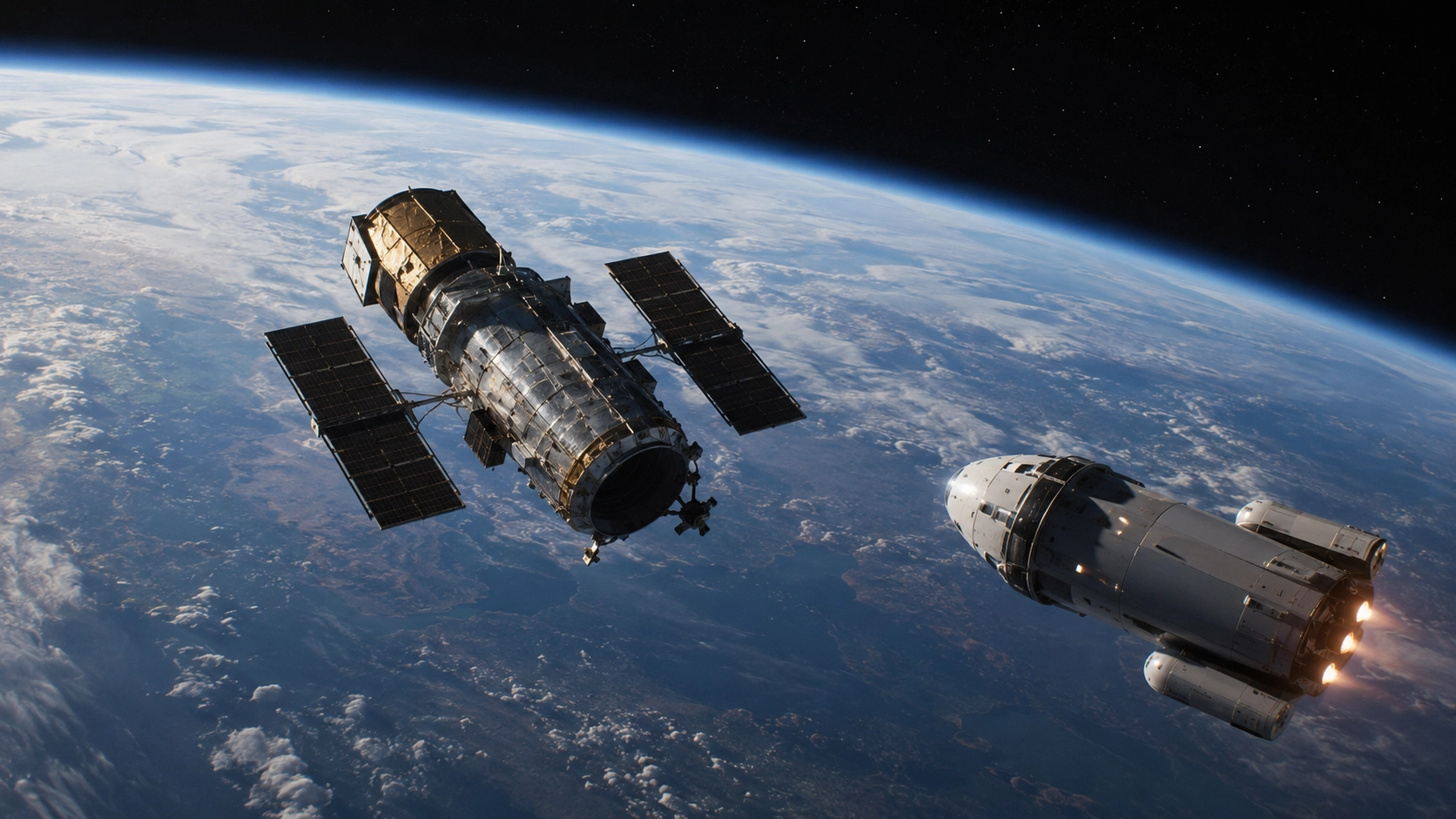
NASA is running out of time to save the Neil Gehrels Swift Observatory, a space telescope that’s spent more than two decades tracking some of the most violent events in the known universe and is now slowly falling back toward Earth.
Swift launched in 2004 to study gamma-ray bursts, the kind of cosmic explosions that can briefly outshine entire galaxies. Over the years, it’s built a reputation for speed. When it detects a burst, it can quickly pivot its instruments toward the source and help other telescopes around the world catch the event in real time. That responsiveness is the whole point, and it’s what makes losing Swift such a painful prospect for astronomers.
The problem is that Swift was never designed to maintain its own orbit. Like most spacecraft in low Earth orbit, it’s subject to atmospheric drag, a slow, persistent pull that gradually brings satellites lower. Under normal circumstances, that drag is manageable, but recent increases in solar activity have caused the outer atmosphere to expand, which has noticeably accelerated Swift’s descent. Without intervention, it will eventually re-enter the atmosphere and burn up.
Rather than let that happen, NASA chose something more ambitious. The agency hired Katalyst Space Technologies, an Arizona-based startup building robotic servicing vehicles, to go and rescue it. The mission involves a spacecraft called LINK that will travel to Swift, grab it, and push it into a higher orbit. If it works, Swift lives. If it doesn’t, well, the telescope keeps falling.
A High-Risk Rescue With Big Implications
The core challenge is that Swift was never designed with rescue in mind. There’s no docking port, no purpose-built attachment point waiting for a servicing vehicle. LINK has to approach carefully, match Swift’s motion in orbit, and physically latch onto the observatory without breaking anything. In an environment where small mistakes carry serious consequences, that’s genuinely hard.
NASA has been upfront about the risk level here, describing the mission as fast-moving and high-risk, which makes a bit more sense when you consider the timeline. Katalyst was contracted in September 2025, giving the company less than a year to design, build, test, and launch a spacecraft capable of performing one of the harder maneuvers in modern spaceflight. That’s an extremely tight window for an orbital servicing mission, let alone one involving a science observatory worth saving.
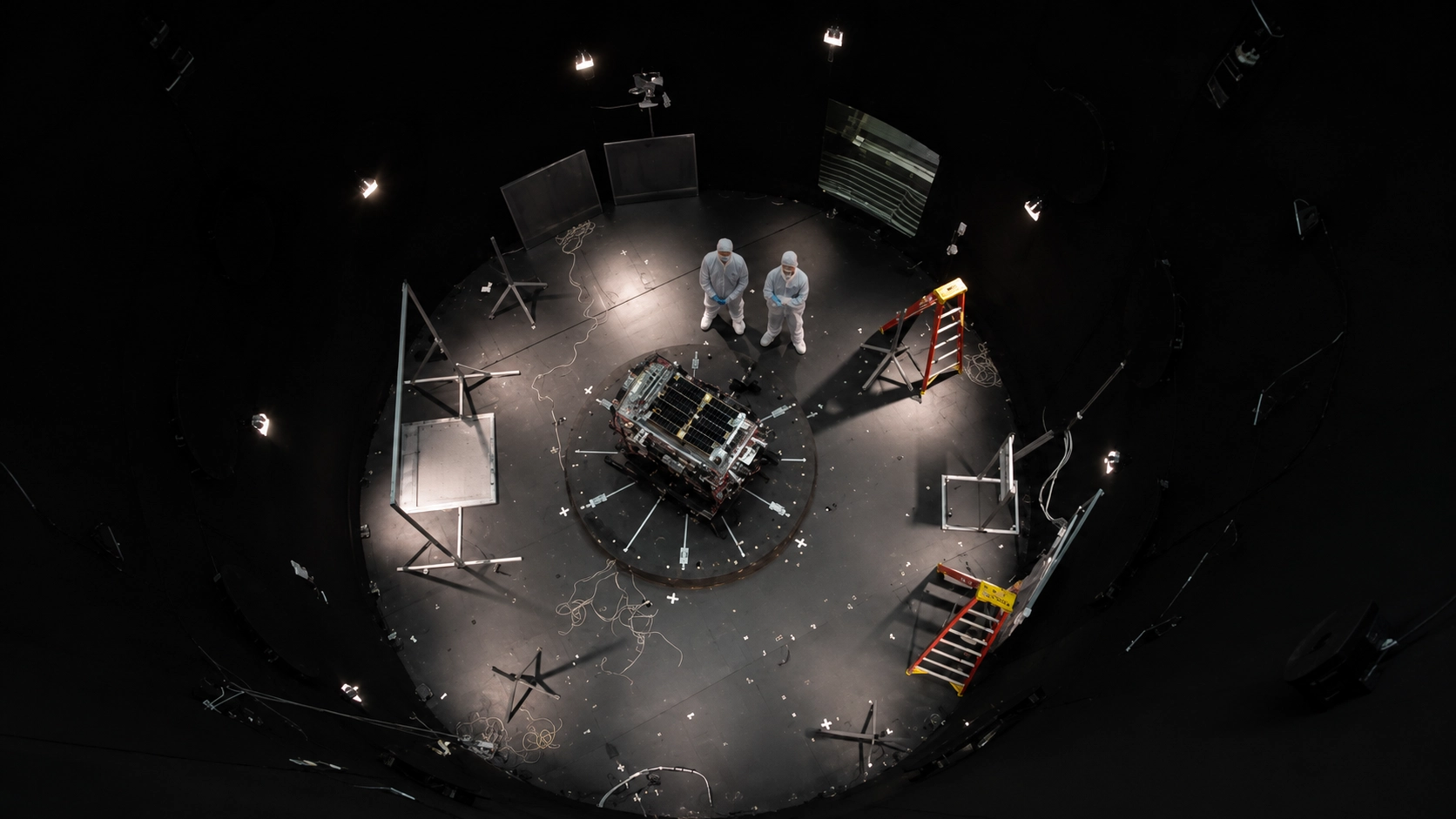
The hardware has already been through environmental testing at NASA Goddard Space Flight Center and has since been shipped to NASA’s Wallops Flight Facility for final integration. LINK will launch aboard a Northrop Grumman Pegasus XL rocket, a vehicle that’s itself carried into the sky by an aircraft called Stargazer before being released over the Pacific near the Marshall Islands.
On the Swift side, NASA has also changed how the telescope operates to buy time. Most science activities have been temporarily suspended so mission controllers can hold the observatory in an orientation that minimizes drag. It’s a significant sacrifice, but it gives the rescue mission a slightly better shot. It also underlines just how urgent this has gotten.
The implications here go well beyond one telescope. Thousands of spacecraft are currently in orbit, many of them expensive, scientifically or commercially valuable, and vulnerable to exactly the kinds of problems Swift is facing: fuel limits, orbital decay, aging components. If LINK can successfully grab and reposition Swift, it proves that robotic servicing vehicles can do this reliably. That changes the calculus for how long satellites can operate and what happens to them when things start to go wrong.
That’s why this mission gets attention outside the astronomy community. The ability to approach, inspect, reposition, or extend the life of a spacecraft in orbit is increasingly relevant to national security and commercial space strategy as that environment gets more crowded and competitive.
For NASA, a successful rescue means keeping a rare and still-useful scientific instrument alive at a fraction of what building a replacement would cost. Swift is over 20 years old, but its ability to respond quickly to high-energy events still fills a role that other observatories don’t. Losing it would leave a noticeable gap.
For Katalyst, this is the mission that either makes them a credible player in satellite servicing or serves as an expensive lesson in how hard this work actually is. Pulling off a complex orbital operation on a compressed timeline with a spacecraft that wasn’t built to be serviced would be a genuine statement. Falling short would be a reminder that catching things in space remains one of the hardest problems in the industry.
This also fits into the broader story of commercial space companies taking on work that used to belong exclusively to government agencies. Launching payloads was just the beginning; now private operators are being asked to repair, reposition, and extend the lives of spacecraft already in orbit. For more on how that shift is playing out, see our coverage of SpaceX’s historic market debut.
Swift’s future now comes down to a mission built on urgency, genuine technical difficulty, and a startup with less than a year to prove it can do something nobody’s quite done before. If LINK pulls it off, NASA saves a valuable scientific asset and demonstrates a new commercial capability at the same time. If it doesn’t, Swift keeps descending toward an eventual fiery end.
A telescope built to chase the universe’s most violent explosions is now waiting on a rescue from orbit. The race is on, and it’s a real one.

0 Comments