


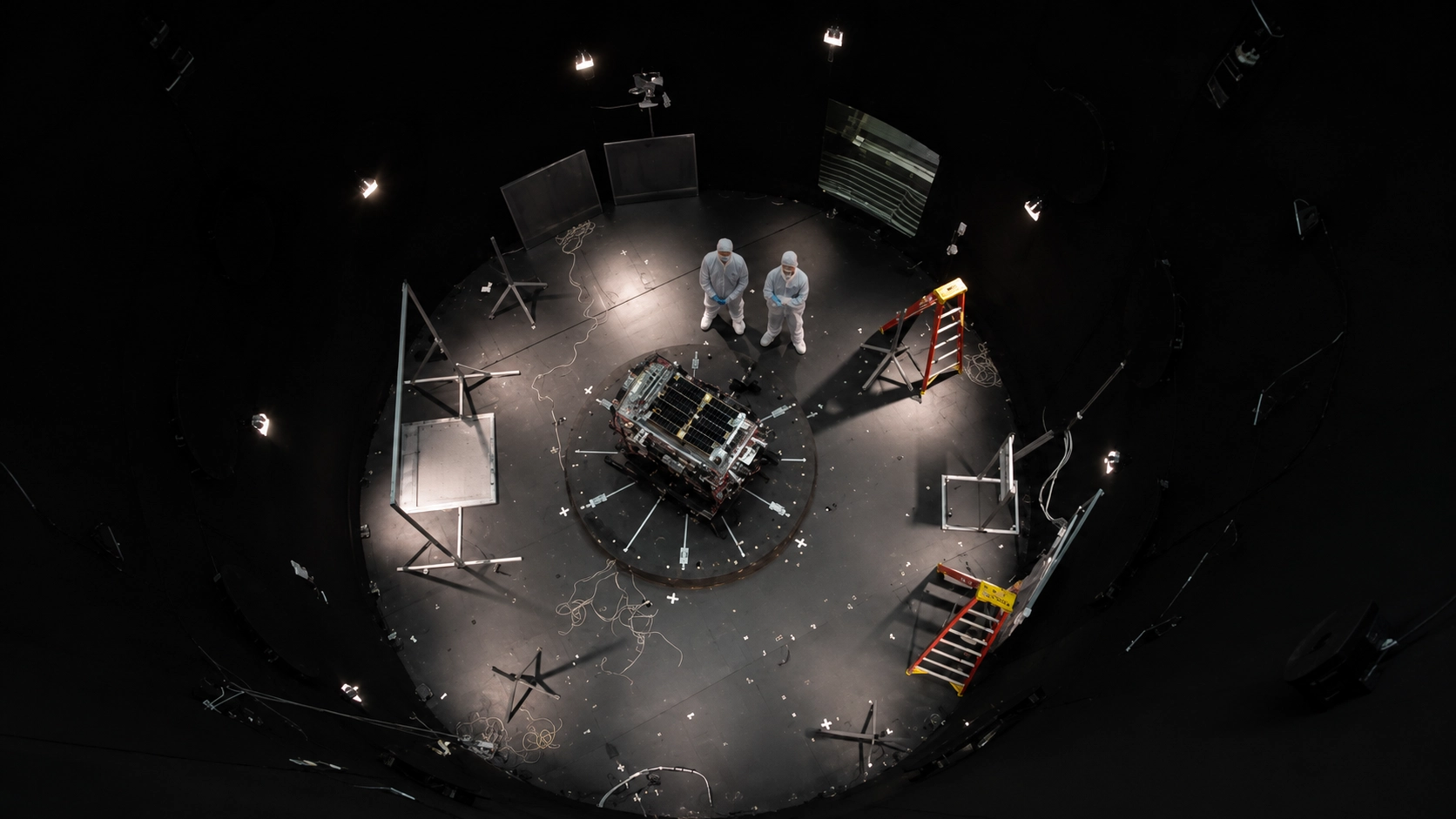
NASA has launched a high-risk rescue mission to save its aging Neil Gehrels Swift Observatory from falling back to Earth, sending a private robotic spacecraft into orbit to push the telescope to a safer altitude.
The mission, backed by a $30 million NASA contract, is being carried out by Arizona-based Katalyst Space Technologies. The company launched its LINK spacecraft aboard a Northrop Grumman Pegasus XL rocket, which was dropped from an aircraft over the Pacific.
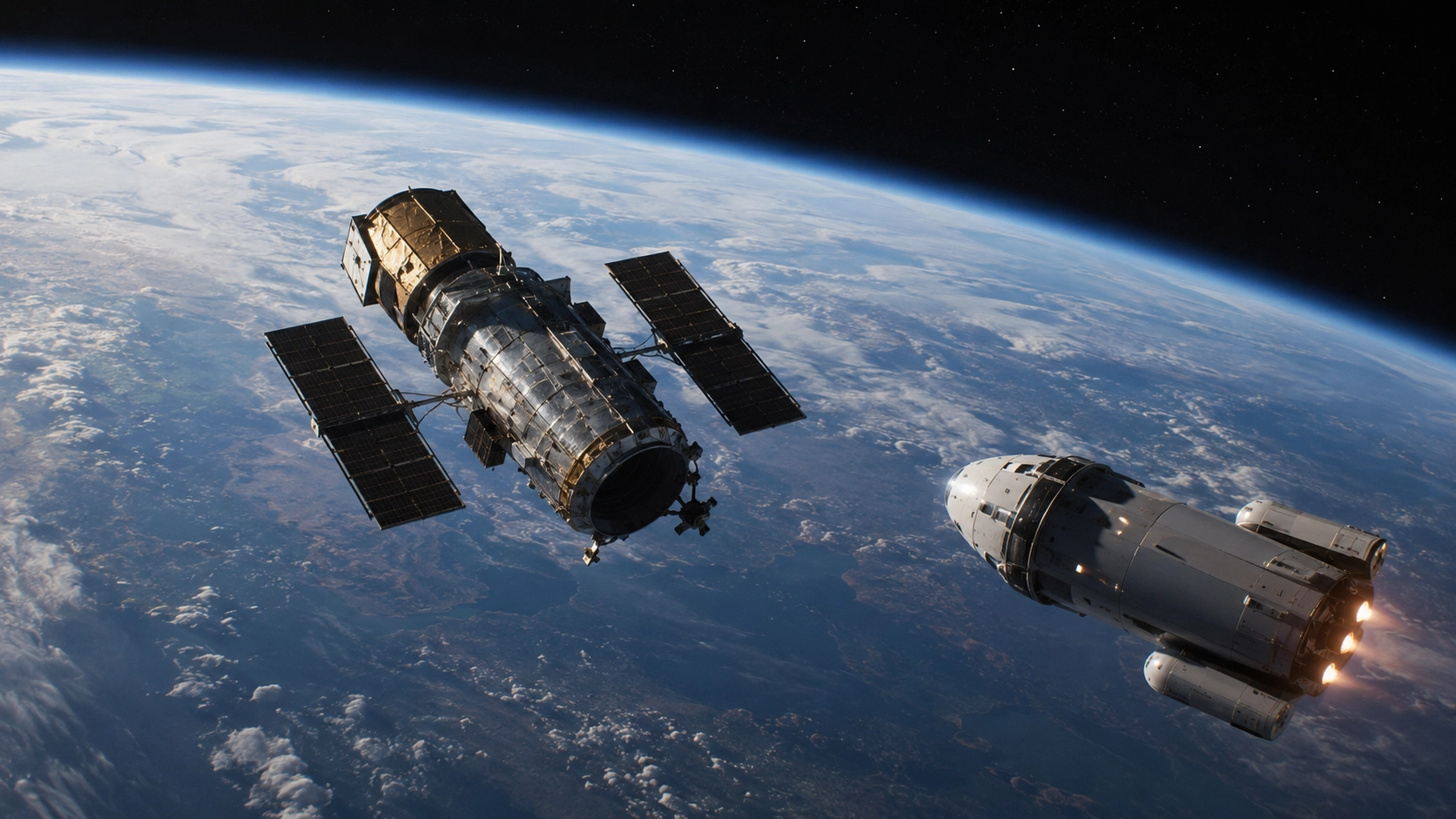
The plan is to reach Swift within about a month, attach to the telescope, and raise its orbit before atmospheric drag pulls it too low to save. Without intervention, the observatory could reenter Earth’s atmosphere and burn up later this year.
Swift launched in 2004 to study gamma-ray bursts, some of the most powerful explosions in the universe. It has lasted far beyond its original mission and still performs valuable work observing fast-changing cosmic events across the gamma-ray, X-ray, ultraviolet, and visible light bands.
The problem is that Swift was never designed to be serviced. No docking port, no propulsion system to raise its own orbit. That makes the rescue genuinely difficult. LINK has to approach carefully, inspect the spacecraft, grab it with robotic arms, and then slowly push it higher, all without anything on Swift designed to help that process along.
NASA says the telescope has been losing altitude faster than usual because heightened solar activity has expanded Earth’s upper atmosphere, creating more drag on satellites in low Earth orbit and gradually pulling them down.
Swift is currently flying only a few hundred miles above Earth. Katalyst is aiming to raise it by about 150 miles, which would extend its operating life and allow science observations to resume.
Swift’s instruments were paused earlier this year to help conserve altitude while NASA prepared the rescue attempt. If things go to plan, the observatory could be back at work later this year.
The stakes go beyond one telescope, though. This is one of the first serious US attempts to save an uncrewed government satellite that wasn’t originally built for in-orbit repair. A successful mission would help prove that aging spacecraft can be rescued rather than written off, and that matters as governments and companies keep packing more satellites into orbit.
Many of those satellites are expensive, hard to replace, and vulnerable to fuel shortages, drag, or mechanical failures. Robotic servicing could allow operators to extend missions, reposition spacecraft, and reduce debris, rather than simply abandoning hardware when something goes wrong.
The mission also reflects how much NASA’s approach to specialized operations has shifted. Rather than building the rescue vehicle itself, NASA contracted Katalyst to develop a commercial servicing spacecraft and move quickly. Private firms are taking on more of these roles: launch, cargo delivery, lunar missions, and now satellite rescue. If LINK works, similar vehicles could eventually repair, refuel, or reposition other spacecraft too.
There are also national-security dimensions worth noting. The same technology that can save a satellite can also approach, inspect, or move one that belongs to someone else. That makes satellite-servicing systems both commercially valuable and strategically sensitive.
For the scientists who rely on Swift, the immediate concern is simpler: keeping it alive. The observatory has helped astronomers study gamma-ray bursts, black holes, supernovae, neutron-star mergers, and other short-lived cosmic events. Losing it would remove a genuinely flexible tool from NASA’s astrophysics toolkit.
Readers following space and science developments can also explore our science coverage.
The mission is still risky. LINK has to pull off a precise rendezvous with a spacecraft that was never designed to be captured. Any failure in approach, attachment, or the boosting maneuver could end the attempt.
But if it works, this could be a meaningful moment for satellite rescue, not just because NASA saves a valuable telescope, but because it demonstrates that spacecraft once considered out of reach can actually be given another shot.
For now, Swift’s future hinges on whether a small robotic spacecraft can reach it before gravity and drag win out.
0 Comments