


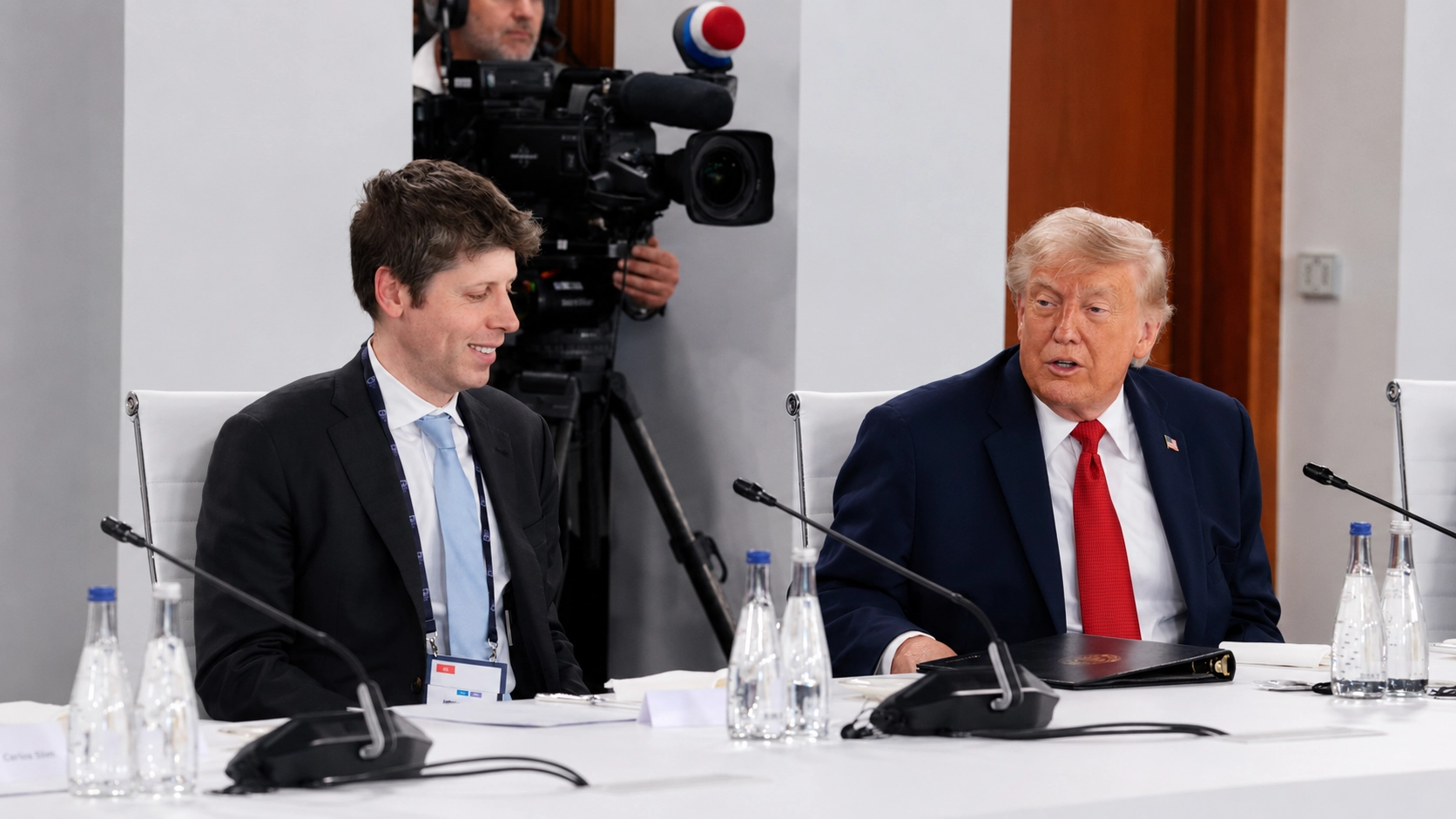
OpenAI has reportedly proposed giving the US government a 5% equity stake in the company, according to a Financial Times report cited by Reuters, a move that would be pretty unprecedented for a high-growth tech company and says a lot about how much political pressure is building around AI.
The proposal is still in the early stages of discussion, and nothing has been finalized. But the basic idea is that Washington would hold a direct financial interest in one of the world’s most valuable AI companies at a time when regulators are paying closer attention to the economic, security, and labor-market risks associated with advanced AI systems.
The structure being discussed would reportedly resemble a public wealth fund, in which the government’s stake would give American citizens a share in the financial gains AI generates. OpenAI has apparently also suggested that other major US AI companies could consider similar arrangements, which, if that idea takes hold, would represent a significant shift in how tech companies relate to the government that regulates them.
The timing connects to a few things happening at once. OpenAI is preparing for a future IPO, faces growing scrutiny over the power and reach of its frontier models, and remains central to the global AI boom through ChatGPT, enterprise tools, and its deep partnership with Microsoft. Offering Washington a stake could help reduce political friction while positioning the company favorably with policymakers who will have a say in its future.
US officials have also been shifting their thinking about AI more broadly. It’s no longer treated purely as a commercial technology; it’s increasingly being framed as a strategic national asset tied to security, jobs, productivity, and competition with China. In that context, a government equity stake starts to make a different kind of sense than it would have even two or three years ago.
There’s also a fairness argument behind all of this. If AI systems end up reshaping large parts of the economy and generating enormous wealth, the question of who benefits becomes genuinely important. Supporters of the proposal argue that value at that scale shouldn’t flow only to shareholders and private investors; some of it should come back to the public. The comparison being floated is something like the Alaska Permanent Fund, which uses resource income to pay public dividends. The argument is that advanced AI could function like a national resource, much as oil or land once did.
It’s a compelling analogy up to a point, but AI is different from natural resources in ways that matter. OpenAI is a private company built on research, proprietary data, computing infrastructure, and commercial partnerships. A government stake would require carefully thought-out rules around governance, conflicts of interest, and accountability, none of which are simple to design.
The critics will have real questions too. A government ownership position in a leading AI company creates obvious tensions: can regulators stay independent if they’re also equity holders? How would political influence over a private company actually work in practice? And if the US sets this precedent, what happens when foreign governments start demanding similar arrangements from AI companies operating in their markets?
For OpenAI, the upside is fairly clear. Offering a stake could ease political pressure, signal willingness to share AI’s benefits more broadly, and build goodwill with the policymakers whose decisions will shape the company’s ability to grow, fundraise, and eventually go public. Whether that goodwill is worth whatever constraints might come attached to government ownership is a harder calculation.
For investors, this is worth watching carefully. A government stake could read as a sign of strong political support for OpenAI. It could also introduce uncertainty around valuation if public-benefit obligations or ownership rights start to affect how the company operates.
The broader regulatory environment is already moving in a more interventionist direction. The US government has shown real willingness recently to step in when frontier AI raises national security concerns, export controls, model restrictions, and tighter oversight of how powerful tools could be misused in cybersecurity or elsewhere. For more on that side of things, see our coverage of the Anthropic ban debate.
Any formal agreement on a government stake would likely face legal, political, and regulatory hurdles. Congressional approval may be needed depending on how the structure works and how any public benefits get distributed. None of that is straightforward, and the proposal could look quite different or disappear entirely by the time it reaches a binding form.
But even as a proposal, it reflects how much the AI conversation has shifted. A few years ago the dominant question was which company could build the most powerful model. Now the questions are about who should control that power, who profits from it, and how much of the value AI creates should be returned to the public.
OpenAI’s 5% proposal doesn’t answer any of those questions cleanly. What it does is confirm that the fight over AI’s economic future has moved well beyond Silicon Valley. Washington is in the room now, and it’s not leaving.

0 Comments