


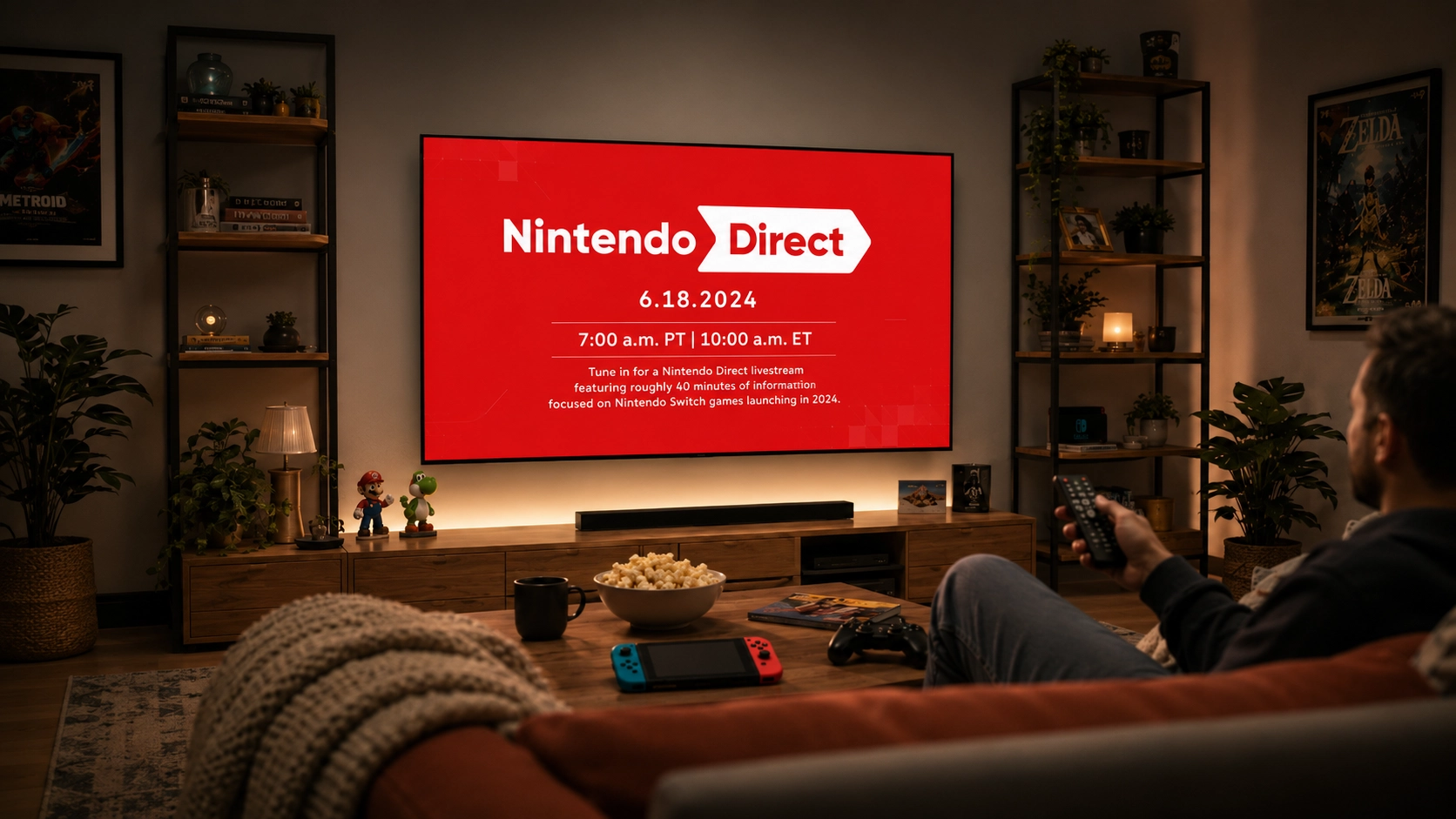
Nintendo has always been one of gaming’s strangest success stories. It doesn’t usually win by copying the rest of the industry. It wins by surprising people. From motion controls to dual screens, from handheld-console hybrids to cardboard accessories, Nintendo has built its identity on taking risks that other companies would probably kill in the first planning meeting.
That’s why the current mood around Nintendo feels a little off. The company is still successful, still loved, and still capable of releasing polished games. But after the latest Nintendo Direct, the bigger question isn’t whether Nintendo has games coming it clearly does. The question is whether Nintendo is getting too careful at a moment when it should be getting weird.
A Strong Lineup, But a Familiar Feeling
Nintendo’s upcoming schedule isn’t weak. The company has several notable titles lined up for Switch 2, including major franchise entries, upgraded versions, remakes, and third-party support. For a lot of fans, that’s enough. Nintendo’s biggest franchises have loyal audiences, and familiar names still move millions of copies.
But familiarity is both a strength and a warning sign. A remake of a beloved classic gets instant attention, but it doesn’t tell you much about where the company is going. A polished sequel satisfies fans without creating the same jolt as a genuinely bold idea. When too much of a platform’s identity leans on the past, the future starts to look less interesting.
That’s the concern right now. Nintendo isn’t failing. It’s not out of ideas. But it’s leaning hard on safer choices, remakes, upgrades, familiar territory instead of delivering the kind of unexpected creative swing that once defined its best moments.
Why Playing Safe Makes Business Sense
To be fair, Nintendo has real reasons to act carefully. The gaming industry is going through a rough stretch. Development costs are up, layoffs have hit plenty of studios, and even major publishers are struggling to read what players actually want. In that environment, a proven franchise is a much safer bet than a strange new concept.
Nintendo also has a lot riding on Switch 2. The original Switch became one of the most successful gaming systems ever built, so following it would always be hard. Taking too many risks too early could confuse buyers or destabilize the console’s launch window. A steady lineup gives the company room to build the install base and keep fans on board.
Remakes and familiar franchises make logical sense from a business perspective. They reduce uncertainty, tap into existing fan loyalty, give new players access to classic games, and help fill the release calendar while larger original projects are still in development.
The issue isn’t that Nintendo should stop making remakes. It’s balance. Nintendo can honor its past without letting the past become the whole pitch.
The Switch Era Worked Because It Felt Brave
The original Nintendo Switch worked because it felt genuinely fresh. The hybrid concept was a simple but powerful play on your TV. Pick it up and keep going. That one idea changed how a lot of people thought about console gaming.
The software also helped define the system. The Legend of Zelda: Breath of the Wild did not feel like a small update. It transformed what a Zelda game could be. Super Mario Odyssey gave Mario a strange, playful, open-ended energy. Later, games like Super Mario Bros. Wonder showed that even older formulas could still be twisted into something lively.
That’s what fans expect from Nintendo at its best. Not just safe nostalgia. That moment where Nintendo shows something odd, colorful, and surprisingly brilliant that nobody else would have made.
Switch 2 needs its own version of that moment.
Nostalgia Is Powerful, But It Has Limits
Nintendo understands nostalgia better than almost anyone. Mario, Zelda, Donkey Kong, Kirby, Pokémon, Metroid, Animal Crossing, these aren’t just gaming products. They’re cultural touchstones that carry emotional weight across generations.
But nostalgia works best when it supports creativity, not when it substitutes for it. A remake can remind players why they loved something. A sequel can continue a story. Neither one alone is a reason for a console to exist.
If Switch 2 ends up too focused on revisiting the Nintendo 64 era, upgrading Switch 1 games, and repackaging older formulas, some players will start asking the uncomfortable question: where’s the new magic?
That question matters because Nintendo’s real advantage has never been raw power. Sony and Microsoft compete more directly on graphics, online services, and hardware specs. Nintendo competes on personality. If that personality becomes too predictable, Nintendo risks losing what actually makes it different.
Nintendo’s Caution Could Affect Younger Players
There’s a generational problem here, too. Older fans love remakes because they remember the originals. Younger players need their own defining Nintendo experiences. A kid picking up Switch 2 shouldn’t only be inheriting someone else’s memories. They should get new games that feel like theirs.
This is where Nintendo has to be careful. Remakes can introduce classics to a new audience in a genuinely valuable way. But the company also needs fresh worlds, new mechanics, and unexpected ideas that today’s younger players can actually claim as their own.
Nintendo has always been good at making games families can enjoy together. To keep doing that, it needs to keep making new memories, not just polishing the old ones.
The Industry Needs Nintendo to Stay Weird
The broader gaming industry is retreating too. Major companies are leaning on remasters, sequels, live-service models, and familiar brands. It’s understandable that big-budget games are expensive and risky. But it also makes the industry feel less adventurous than it used to.
Nintendo has usually been the exception to that. When others chased cinematic realism, Nintendo made playful, colorful games. When others focused on power, Nintendo focused on clever design. When others followed trends, Nintendo often went the opposite direction on purpose.
That’s why seeing Nintendo get cautious is genuinely disappointing. The industry doesn’t need Nintendo to behave like every other publisher. It needs Nintendo to stay strange.
What Nintendo Should Do Next
Nintendo doesn’t need to abandon safe games. It just needs to balance them with something bolder. Remakes can sit alongside original projects. Familiar franchises can come back with unusual mechanics. Smaller experimental titles can fill gaps between the big releases.
The company also needs to give clearer creative reasons for Switch 2 to exist. Better visuals and smoother performance are useful, but they’re not sufficient. Players need games that feel designed around the system’s identity, not games that could have shipped on the previous console with minor improvements.
A new Mario, a bold Zelda experiment, a surprising original IP, a genuinely clever use of Switch 2’s hardware, any of those could change the conversation quickly. Nintendo doesn’t have to show everything at once. It does need to show that caution and complacency aren’t the same thing, and that it knows the difference.
Final Thoughts
Nintendo is still in a strong position. The brands are powerful, the fan base is loyal, and its games regularly hit a level of polish that most studios struggle to reach. But success can make a company conservative. When a formula works too well, protecting it starts to feel safer than challenging it.
That’s the risk right now. Playing safe might protect short-term sales. Bold ideas are what create the moments people talk about for years. Nintendo’s own history makes the case that its biggest wins almost always came from doing something that looked a little strange at first.
Switch 2 doesn’t need Nintendo to be reckless. It needs Nintendo to be brave again. The remakes and sequels can keep the platform steady, but the next unforgettable Nintendo moment is going to come from something nobody saw coming.
Nintendo isn’t in trouble. But it’s getting comfortable. For a company whose whole identity is built on surprise, that might be the most dangerous thing it could become.
0 Comments